Ways to join
Special Forces In World War 2 Podcast
$1.50/month
- Ad-free listening
For members only
72 episodes
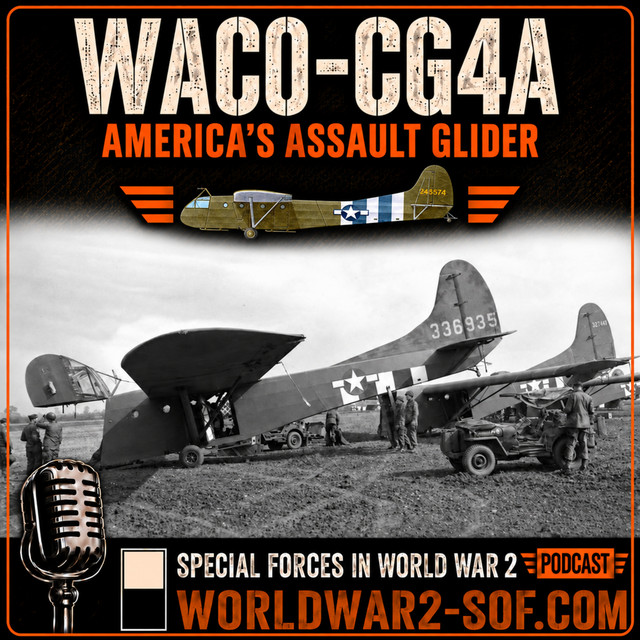
- WACO CG-4A, America's Assault GliderIn February 1941, Major General Henry Arnold, known as Hap Arnold, orders the development of an assault glider for the United States Army. The country has no combat glider and no combat glider pilots, and most established manufacturers hesitate to take the work. This episode follows the American answer: the Waco CG-4A.We follow the glider from eight prototype contracts to the one design that meets every Army requirement. We look at its production by sixteen companies, including a refrigerator ma
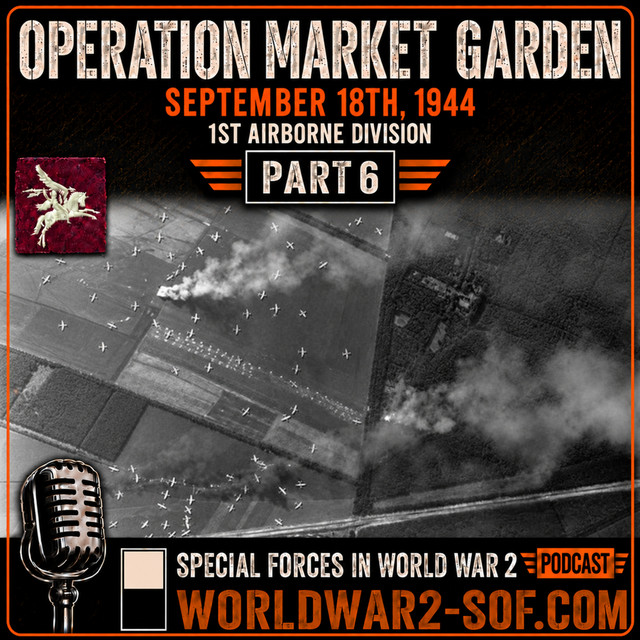
- Operation Market Garden, 1st Airborne Division, September 18th, 1944, Part 6Part 6 of our Operation Market Garden series follows the second lift of the 1st Airborne Division, from the airfields in England on the evening of Sunday, September 17th, 1944, to the landing zones west of Arnhem on Monday afternoon.Fog over southern England delays take-off by four hours, and the men at Arnhem cannot be told. First Allied Airborne Army Headquarters switches the lift to the shorter Northern Route at the last moment. On the ground, the 1st Airborne Reconnaissance Squadron searches
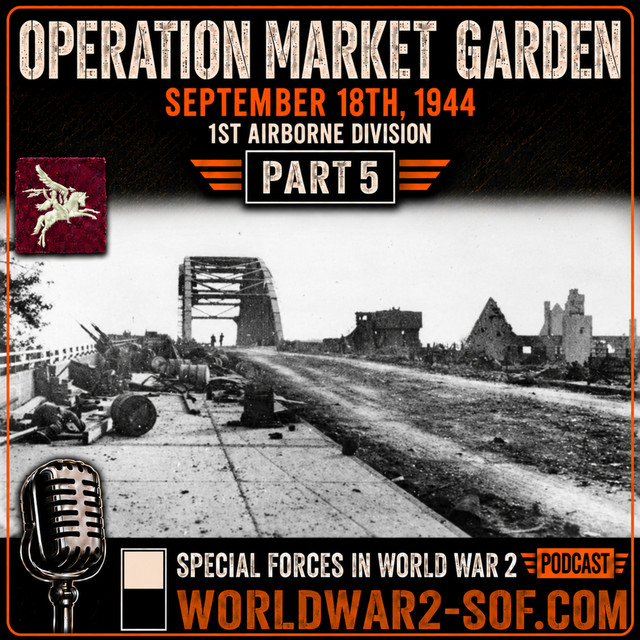
- Operation Market Garden, 1st Airborne Division, September 18th, 1944, Part 5Part 5 of our Operation Market Garden series follows the units already on the ground at Arnhem through Monday, September 18th, 1944, from midnight until midnight.At the northern end of the road bridge, Lieutenant-Colonel John Frost holds on with a mixed force of paratroopers, sappers, anti-tank gunners and glider pilots. Around them, SS-Sturmbannführer Ludwig Spindler builds a blocking line across the western approaches to the town. Brinkmann’s reconnaissance troops probe the perimeter, and SS-H
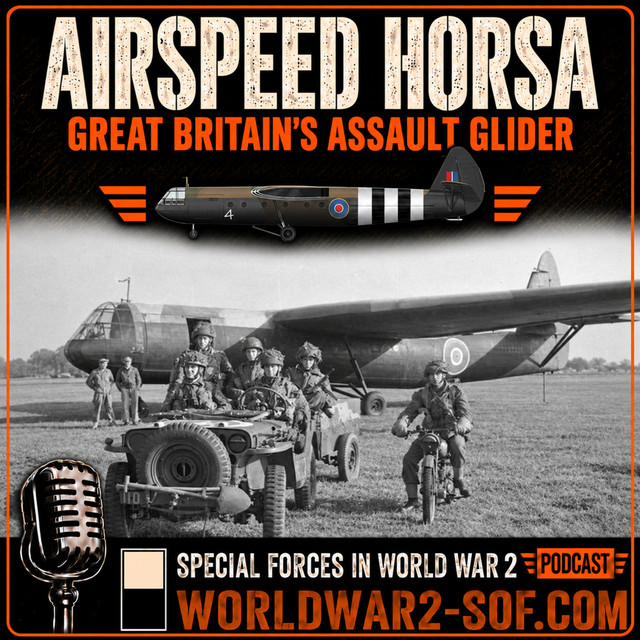
- Airspeed Horsa, Great Britain's Assault Glider.It has no engine. It is built almost entirely of wood, by furniture makers. It carries 25 soldiers, or a jeep, or a gun, into the dark behind enemy lines.The Airspeed Horsa is Britain’s main assault glider of the Second World War. In this episode, Michael Weyers follows it from the first British reaction to Eben Emael in 1940, through the specification, the design team and the first flight, to the factories that build it in 30 sub-assemblies. He looks inside the glider, from the cockpit to the t
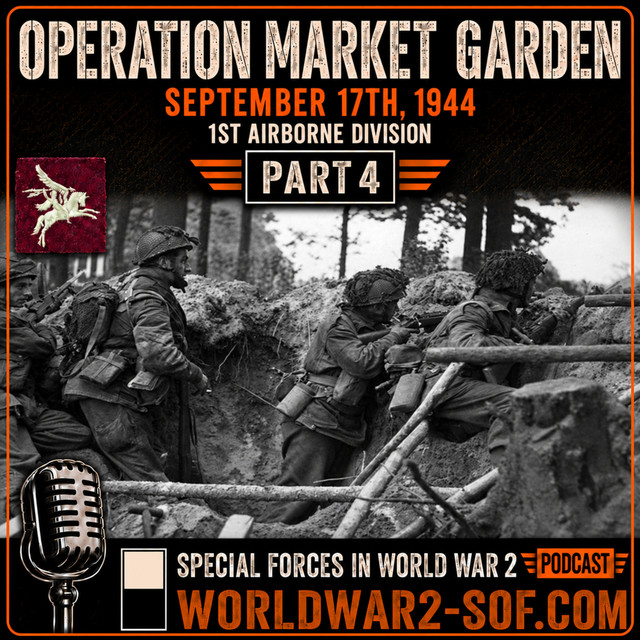
- Operation Market Garden, 1st Airborne Division, September 17th, 1944, Part 4The first lift is down. The bridge is eleven kilometres away. And the clock is already running.This episode covers the afternoon and evening of Sunday, September 17th, 1944, as the British 1st Airborne Division sets out for the road bridge at Arnhem.Major Freddie Gough's Reconnaissance Squadron is to get there first, by Jeep, and hold the bridge until the infantry arrive. Instead, his lead vehicle drives into an ambush on a sandy track east of Wolfheze, set minutes earlier by a German training b
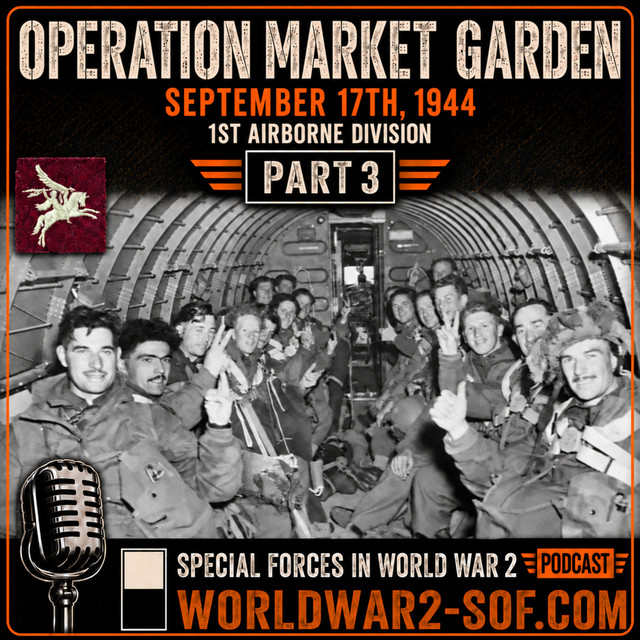
- Operation Market Garden, 1st Airborne Division, September 17th, 1944, Part 3Version 1.2 During the editing of this episode, we accidentally duplicated one segment, resulting in approximately 25 minutes of repeated audio. We apologise for the mistake. This has now been corrected in Version 1.2.On Sunday, September 17th, 1944, the largest airborne operation in history begins. This episode follows the first lift of the British 1st Airborne Division from the runways of southern England to the heaths and farmland west of Arnhem.It starts in darkness. Almost 1,400 Allied sort
- Preparations for Operation Market Garden, Part 2In Part Two of this opening episode, the ground half of Operation Market Garden takes shape: XXX Corps, spearheaded by the Guards Armoured Division, tasked with breaking out from the bridgehead at Joe's Bridge and driving up a single road to reach the airborne forces at Arnhem, on a timetable that leaves almost no margin for delay.Then come the final days before the operation launches: last briefings, cancelled leave, a night of heavy Allied bombing against German airfields and defences across t
- Preparations For Operation Market Garden, Part 1September 1944. The Allied armies have shattered the German front in France and driven deep into Belgium, and then, suddenly, they run out of road. Low on fuel, stretched across hundreds of kilometres of supply lines, the advance stalls just short of the Dutch border.Out of that crisis comes Operation Market Garden: the largest airborne operation ever attempted, a daring bid to seize a chain of bridges across Holland and open a path straight into the heart of Germany.In Part One of this two-part
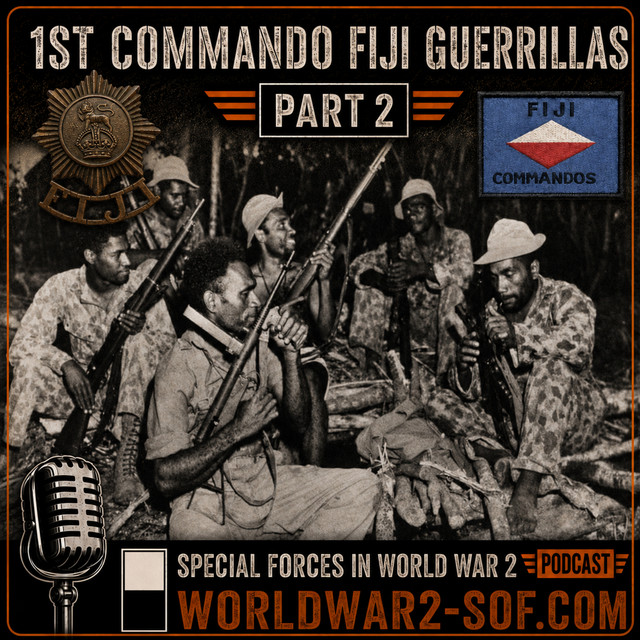
- 1st Commando Fiji Guerillas, Part 2By mid-1942 the Japanese tide in the Pacific is turning, and the invasion Fiji feared never comes. But the war is not finished with the First Commando Fiji Guerrillas.In this episode, the American forces take over the defence of Fiji, and the New Zealand-led commandos pass under a new command. They become an unexpected thing: a jungle-warfare school for the incoming US Army, running night raids and mock ambushes against their own allies, and arming their Fijian soldiers at last. Then the orders
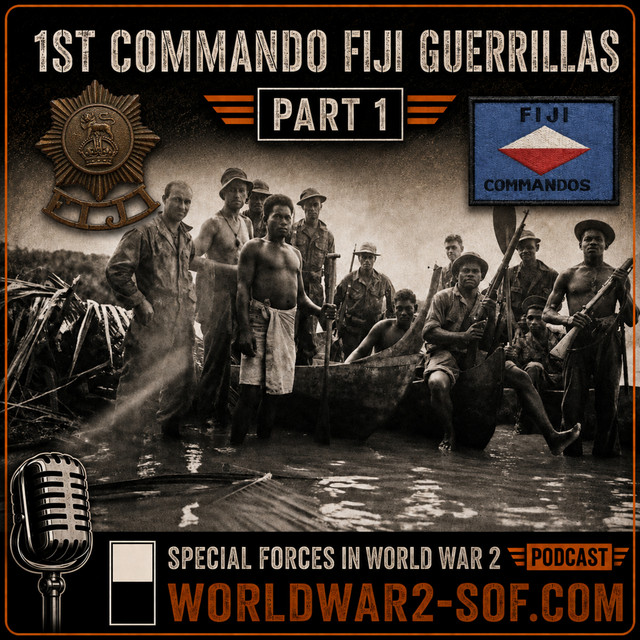
- 1st Commando Fiji Guerrillas, Part 1In the dark first months of 1942, the Japanese advance sweeps south across the Pacific, and Fiji lies squarely in its path. The islands guard the sea and air routes that keep Australia and New Zealand supplied, yet the garrison is far too small to hold every shore.The answer is an unusual one. In the least accessible corners of the main island, a handful of New Zealanders are sent to raise small bands of guerrillas from the Fijian people, and to hide them in the bush. Their orders are not to win
- 1st Special Service Brigade, D-Day and Beyond, Part 3June 6th, 1944. The Commandos of 1st Special Service Brigade have fought their way off Sword Beach and up to the bridges over the Caen Canal and the River Orne. Now the harder task begins. They must climb onto the high ground beyond the Orne and hold it, whatever the enemy sends against them.This episode widens to the whole Brigade. Number 3 Commando, Number 4 Commando, Number 6 Commando, and Number 45 Royal Marine Commando, on a low ridge that is the far left edge of the entire invasion. Hold i
- 1st Special Service Brigade, D-Day and Beyond, Part 2They came ashore into a beach that had not been cleared, and they were still fighting three days later.In our last episode we followed 1st Special Service Brigade as a whole, from the Normandy beaches to the bridges over the Caen Canal and the River Orne. Now we go back and follow the Commandos one unit at a time.First, No. 4 Commando. We land with them on Sword Beach alongside Capitaine de corvette Philippe Kieffer's French troops, setting foot on their own soil for the first time in four years
- 1st Special Service Brigade, D-Day and Beyond, Part 1June 6th, 1944. On the far eastern edge of the greatest invasion in history, the whole enterprise hangs on a single flank. Hold it, and the beachhead is secure. Lose it, and the enemy pours in from the east.https://worldwar2-sof.com/welcome-to-world-war-2-special-forces-com/which-special-forces-operations-took-place-in-world-war-2/which-special-forces-operations-took-place-in-1944/which-special-forces-operations-took-place-in-june-1944/operation-overlord/operation-neptune/sword-beach/1st-special
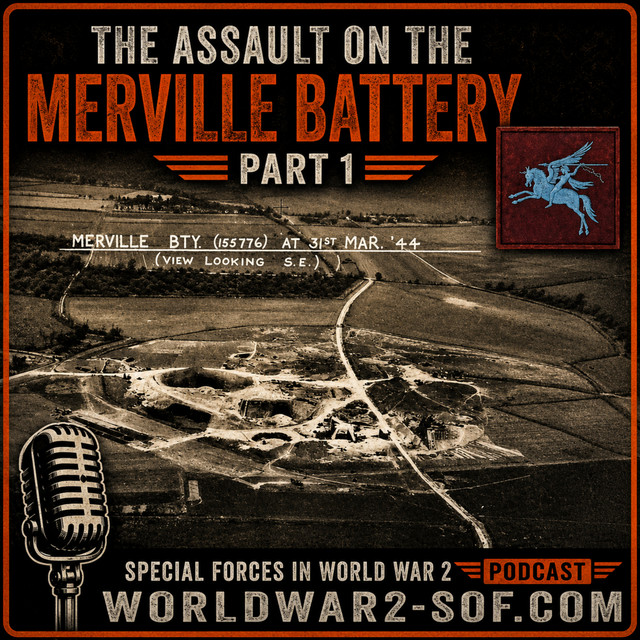
- Assault on the Merville Battery, Part 2.Improved 2 part episode of the Merville assault. In the early hours of June 6th, 1944, the 9th Parachute Battalion drops into chaos. Aircraft scatter six hundred men across the flooded fields of Normandy. A handful find their way to the wire of Batterie de Merville. What follows is one of the most audacious small-unit actions of the Second World War.In this episode we follow Major George Smith's Trowbridge Party from the wire back to a battalion that barely exists. We follow Lieutenant-Colonel T
- Assault on the Merville Battery, Part 1.Improved 2 part episode of the Merville assault. In the early hours of June 6th, 1944, the men of the 9th Parachute Battalion will jump into the darkness over Normandy. Their objective is the Merville Battery, four guns in reinforced concrete, behind wire, mines, and a garrison of one hundred and sixty men. From its emplacements the battery commands the approaches to Sword Beach, where the British infantry will come ashore at dawn. It must be silenced before the landings begin.This is part one o
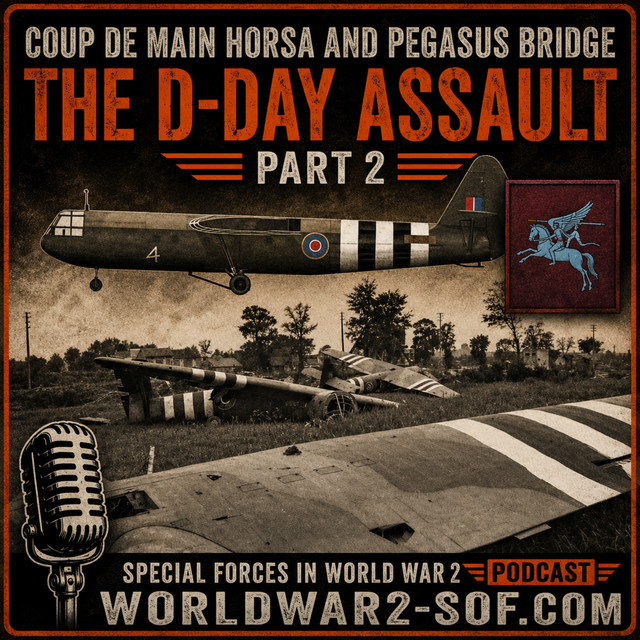
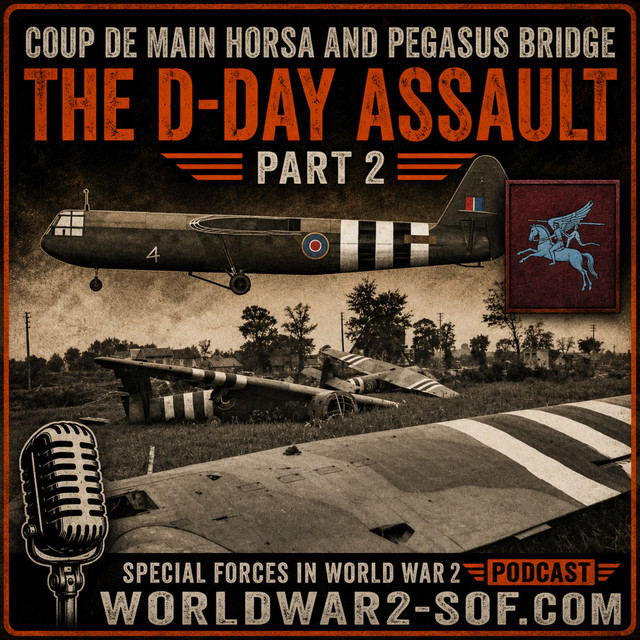
- Coup de Main. The D-Day Assault on the Pegasus and Horsa Bridge. Part 2In the thrilling conclusion of our series on the Coup de Main, we take you to the night of June 6, 1944. Join us as we follow Staff Sergeant Jim Wallwork, Major John Howard, and the men of the 2nd Oxfordshire and Buckinghamshire Light Infantry in their daring glider assault on the Pegasus and Horsa bridges. Experience the tension, bravery, and chaos as these soldiers fight to secure these vital crossings against formidable German defenses. From the precise crash landings to the intense firefight
- Coup de Main. The Preperations for the D-Day Assault on the Pegasus and Horsa Bridge. Part 1In this gripping first episode of our series on the Coup de Main, we dive into the meticulous preparations led by Major John Howard and the 2nd Oxfordshire and Buckinghamshire Light Infantry. Discover how Field Marshal Bernard Law Montgomery's strategic decisions set the stage for one of World War II's most daring missions. Follow the intense training, strategic planning, and rigorous exercises that transformed ordinary soldiers into a formidable force. Learn about the importance of capturing th
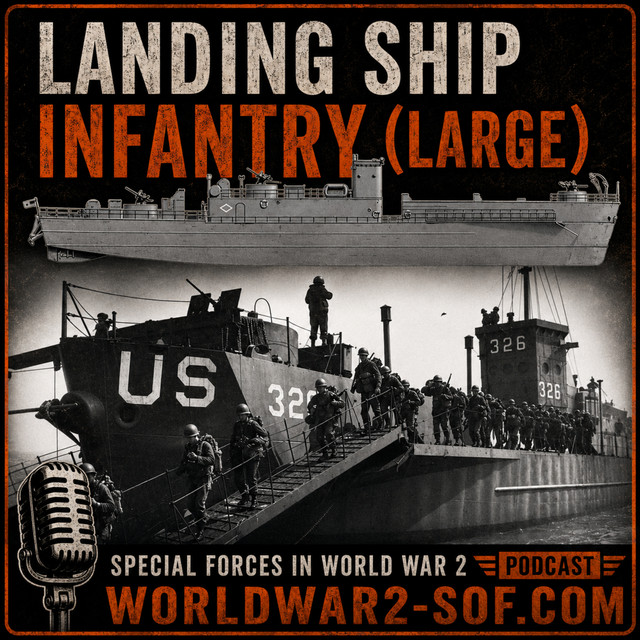
- Landing Craft Infantry, (Large)She is forty-eight metres long, flat-bottomed, and built without a keel. She crosses the Atlantic under her own power, carrying two hundred infantry to defended beaches her smaller cousins cannot reach. Her side ramps earn the grim nickname of "bullet magnets" from the soldiers who descend them under fire. Without the Landing Craft, Infantry, Large, there is no Sicily, no Salerno, no Anzio, no Normandy, no Iwo Jima, and no Okinawa at the scale the Allies achieve.This episode of The Special Force
- Operation Archway, Special Air Service, Part 2April to May 1945. As the German front collapses, 1 and 2 Special Air Service race ahead of the British Army to secure key towns, hunt down Nazi officials, and liberate Bergen-Belsen concentration camp. From Celle to the Elbe, and finally to Lübeck and Kiel, the Special Air Service plays a decisive role in the war’s final days. This episode follows their operations in the north German plain as the Third Reich disintegrates.Part One covers the Rhine crossing and the Special Air Service actions in
- Operation Archway, Special Air Service, Part 1March 1945. As the Allies cross the Rhine, 1 and 2 Special Air Service launch their final campaign in northwest Europe. Operating in fast-moving jeep columns, they strike deep behind enemy lines, linking with airborne forces, sabotaging German movements, and disrupting retreating units ahead of the main advance. This episode follows their actions across the Rhine and into Germany during the opening phase of Operation Archway.Part Two will continue the story into April and May 1945, through the l
- Landing Ship, TankShe has no name. She carries only a number on her bow. She is slow, flat-bottomed, and unglamorous. Sailors call her a Large Slow Target. Yet without the Landing Ship, Tank, there is no Operation Torch, no Husky, no Avalanche, no Shingle, no Overlord, no Dragoon, no Iwo Jima, and no Okinawa.In this episode of The Special Forces in World War II Podcast, host Michael Weyers tells the story of the vessel that solved a problem the Royal Navy had carried unsolved since the beaches of Gallipoli in 191
- Unternehmen Danzig, Sturmgruppe Granit, The Assault on Fort Eben Emael, Part 3On the morning of May 10th, 1940, sixty-two Fallschirmjäger of Sturmgruppe Granit hold the roof of the most modern fortress in Europe. Below them, around twelve hundred Belgian soldiers of Fort Eben Emael are sealed in the tunnels under steel doors and sandbags. Between them, in the stairwells and ascent shafts, a silent division of the battlefield is in place. Their commander, Oberleutnant Rudolf Witzig, is still trying to reach his fort.In this final episode of our series on Unternehmen Danzig
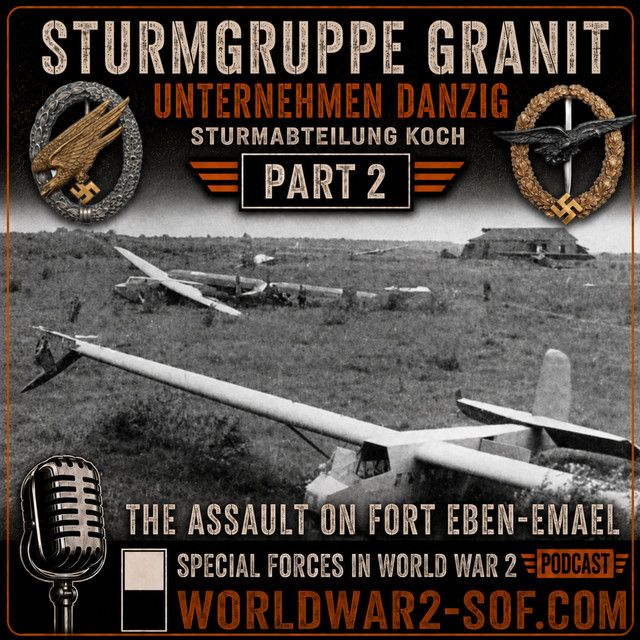
- Unternehmen Danzig, Sturmgruppe Granit, The Assault on Fort Eben Emael, Part 2On the morning of May 10th, 1940, as German armour rolls west, DFS 230 assault gliders descend on the roof of Fort Eben Emael, the most modern fortress in Europe. Ten Gruppen of Sturmgruppe Granit, under Oberleutnant Rudolf Witzig, set down on the grass of the superstructure with hollow charges of up to fifty kilograms, flamethrowers, MP 38s and grenades. Their objectives are the heavy artillery cupolas, the machine-gun blocs, the anti-aircraft position and the observation posts of a fortress de
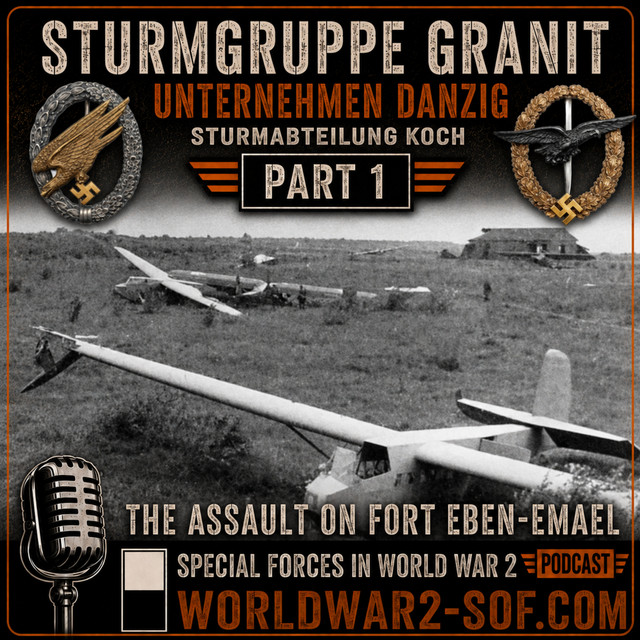
- Unternehmen Danzig, Sturmgruppe Granit, The assault on Fort Eben Emael, Part 1On May 10th, 1940, 86 Fallschirmjäger combat engineers of Sturmgruppe Granit board eleven DFS 230 assault gliders at Köln-Ostheim and turn west toward the most powerful fortress in Belgium. Their target is Fort Eben-Emael, a self-contained underground city of 1,200 men whose guns dominate every Albert Canal crossing from Maastricht to the south. Without the fort, Fall Gelb stalls. Without the bridges, the fort cannot be bypassed. Unternehmen Danzig must achieve both objectives simultaneously, in
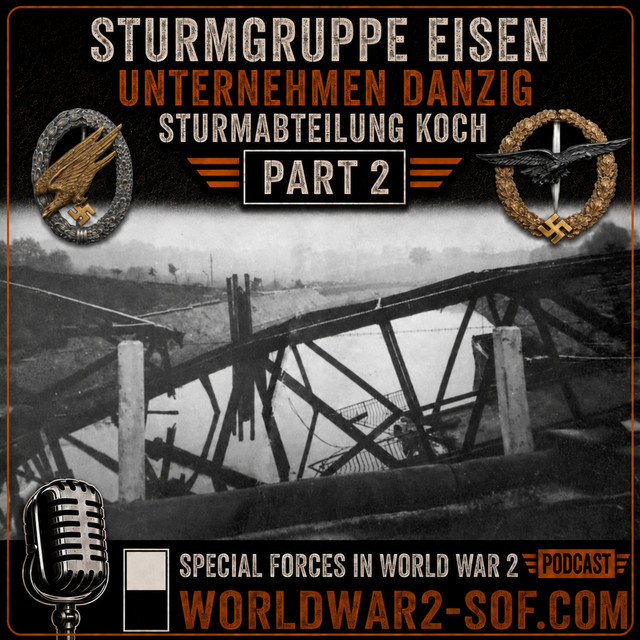
- Unternehmen Danzig, Sturmgruppe Eisen, Part 2In part two of our coverage of the battle for the bridge at Kanne, the fighting moves to the Opkanne heights, where the men of Sturmgruppe Eisen and the 2e Régiment de Grenadiers fight a brutal, fragmented battle across twelve strongpoints. The bridge is already gone. Leutnant Schächter is wounded within the first hour. The parachute reinforcement under Oberjäger Nollau is destroyed in the air above North Hill before it can fire a single shot. And Lieutenant Berlaimont's machine guns hold the ca
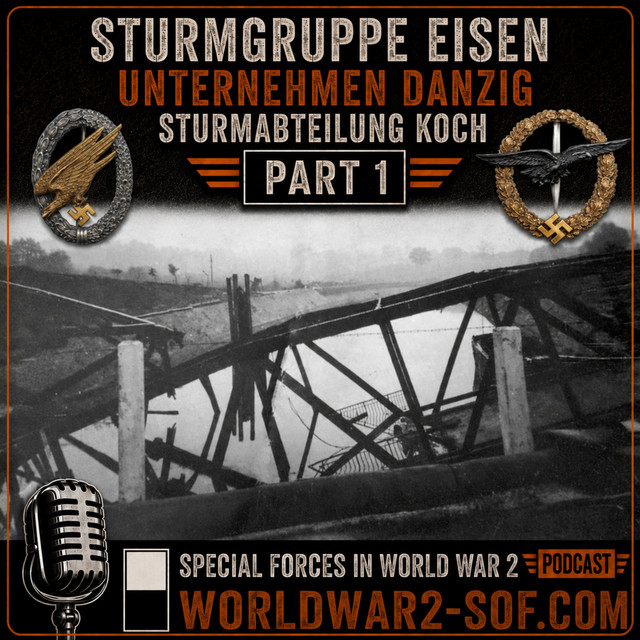
- Unternehmen Danzig, Sturmgruppe Eisen, Part 1In the third of Sturmgruppe Koch's Albert Canal objectives, Gruppe Eisen and its eighty-nine Fallschirmjäger under Leutnant Martin Schächter face a very different fight from the one at Veldwezelt and Vroenhoven. The bridge at Kanne sits in broken terrain on the edge of Fort Eben-Emael's defensive perimeter. The western bank offers no suitable landing ground. The Belgian garrison is alert. And the fifteen minutes lost during the glider approach will cost Gruppe Eisen everything.This episode cover
- Unternehmen Danzig, Sturmgruppe Beton, Part 2On May 10th, 1940, in the opening minutes of Fall Gelb, the German offensive in the west, a handful of Fallschirmjäger from Sturmgruppe Beton land by glider on the banks of the Albert Canal at Vroenhoven, Belgium. Their objective is the road bridge. Their window is minutes. The Belgian garrison is armed, the demolition charges are primed, and the casemate line along the canal slope is manned and ready.What follows is one of the most remarkable small-unit actions of the entire war. In this episod
- Unternehmen Danzig, Sturmgruppe Beton, Part 1On the night of May 9th, 1940, a group of specially trained German Fallschirmjäger board DFS 230 assault gliders at Köln-Ostheim airfield and prepare for one of the most audacious airborne operations of the Second World War. Their objective is the bridge at Vroenhoven on the Albert Canal in Belgium, a reinforced concrete crossing guarded by bunkers, casemates, infantry trenches, anti-tank guns, and prepared demolition charges. If those charges detonate, the momentum of the entire German offensiv
- Unternehmen Danzig, Sturmgruppe Stahl, Part 2On May 10th, 1940, at 05:20, ten German DFS 230 gliders descend over the Albert Canal in Belgium. Their objective: seize the steel bridge at Veldwezelt before Belgian engineers can detonate the demolition charges.Within minutes, Fallschirmjäger of Sturmabteilung Koch are landing directly on the positions of the 2e Régiment de Carabiniers. Bunker N is assaulted. Trench systems north and south of the bridge erupt in close-quarters fighting. Demolition cables are cut. Communications fail. Conflicti
- Unternehmen Danzig, Sturmgruppe Stahl, Part 1Most of us know the story of Pegasus Bridge on June 6, 1944. We remember the British coup de main at the Caen Canal and the Orne. We remember the 9th Parachute Battalion at Merville.But four years earlier, in the pre-dawn darkness of May 10, 1940, a similar operation unfolded over Belgium.In this episode, we examine the German airborne assault on the steel bridge at Veldwezelt, one of three Albert Canal crossings targeted in Unternehmen Danzig. Carried in DFS 230 gliders and released from Junker
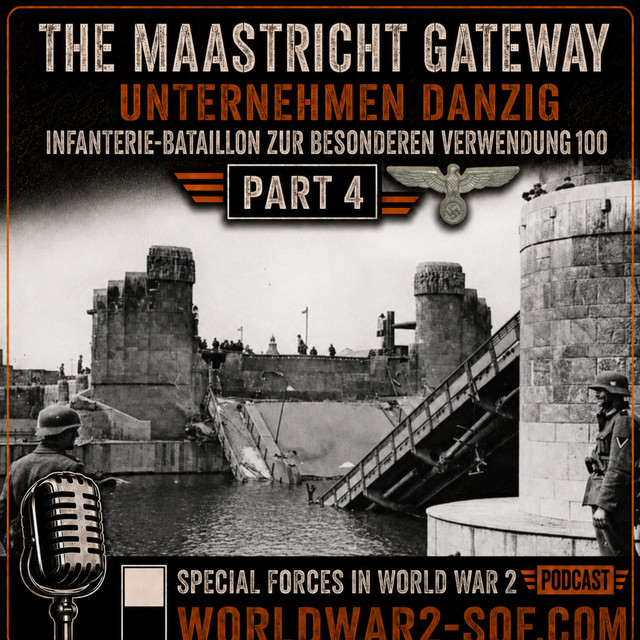
- The Maastricht Gateway, Infanterie-Bataillon zur besonderen Verwendung 100In the early hours of May 10th, 1940, while German gliders land on Fort Eben-Emael and Fallschirmjäger seize the Albert Canal bridges at Veldwezelt, Vroenhoven, and Kanne, another race begins just to the north.This episode follows the Maastricht Gateway, the critical ground operation designed to reinforce the airborne bridgeheads. Sabotage teams infiltrate the city in civilian clothing. Sonderverband Hocke advances in disguised Dutch Marechaussee uniforms. Infanterie-Bataillon zur besonderen Ver
- DFS 230 LastensegelflugzeugIn the early hours of May 10th, 1940, silent assault gliders land on the roof of Fort Eben-Emael. Within minutes, one of Europe’s most modern fortresses is neutralised, and the world witnesses a new form of warfare.In this episode of The Special Forces in World War II Podcast, we tell the full story of the DFS 230, the German assault glider that makes these precision landings possible. From its origins in secret pre-war development, to its combat debut in Belgium, its mass deployment over Crete,
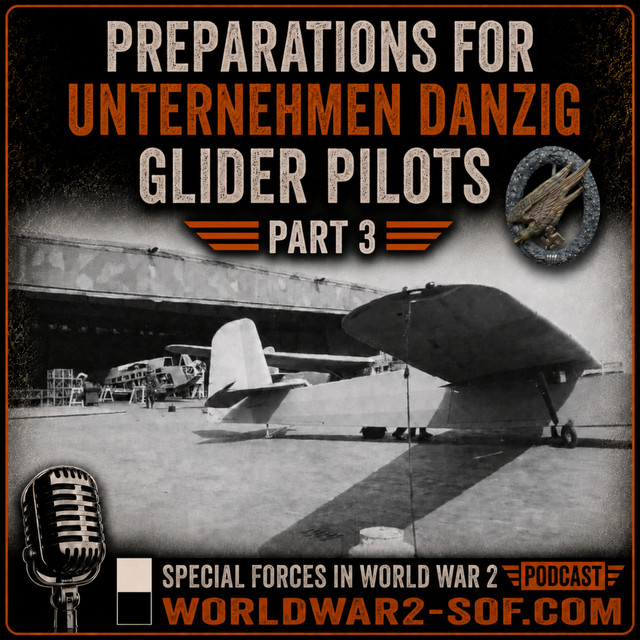
- Preperations For Unternehmen Danzig, Glider PilotsThis part three about Unternehmen Danzig. In the winter of 1939, a quiet airfield in Hildesheim, Germany became the unlikely birthplace of one of World War II’s most audacious and closely guarded military experiments.Under the misleading cover name “Propaganda-Ballonzug”, a group of handpicked glider pilots — many of them civilian champions and Olympic-caliber aviators — were assembled for a mission so secret, even the men themselves weren’t told what they were training for.Their commander: Ober
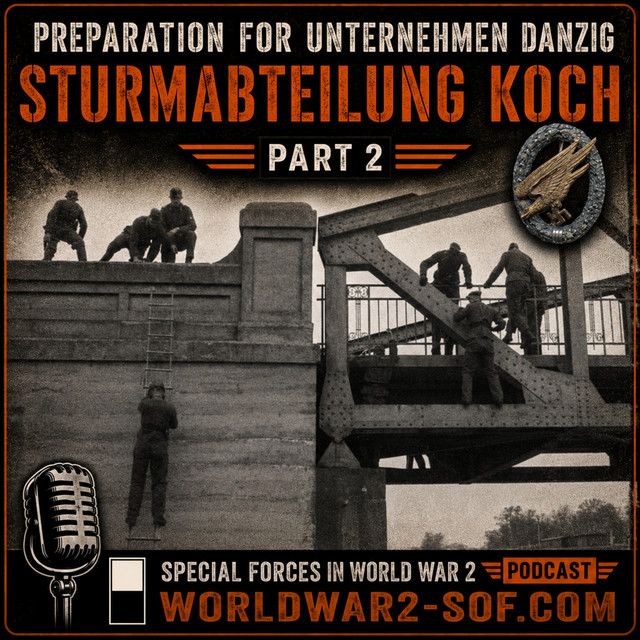
- Preperations for Unternehmen Danzig, Sturmabteilung KochIn this second episode of our series on Unternehmen Danzig, we turn from the battlefield to the attackers themselves.After examining the Belgian defences along the Albert Canal and Fort Eben-Emael in Episode 1, this episode follows the creation and preparation of Sturmabteilung Koch,the specially formed German airborne assault unit tasked with seizing the canal bridges at Veldwezelt, Vroenhoven, and Kanne, and neutralising Fort Eben-Emael at the opening of the 1940 campaign in the West.Built fro
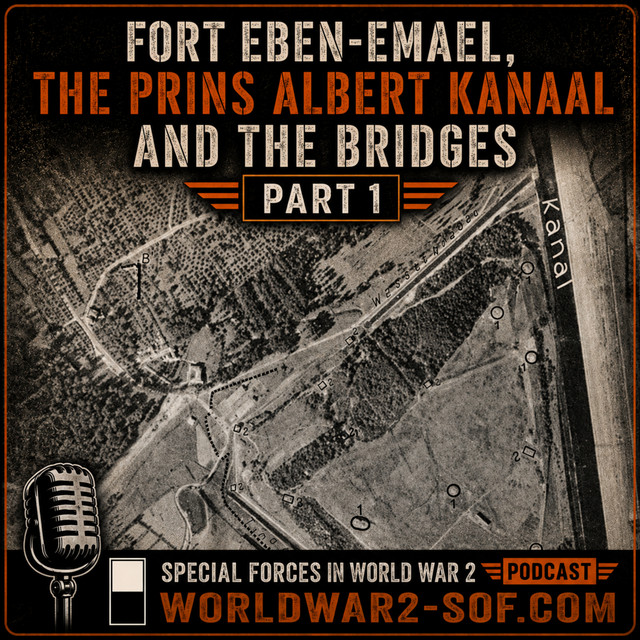
- Fort Eben-Emael, The Prins Albert Kanaal and the bridgesAt the eastern gateway of Belgium stands one of the most ambitious fortresses ever built.https://worldwar2-sof.com/welcome-to-world-war-2-special-forces-com/which-special-forces-operations-took-place-in-world-war-2/which-special-forces-operations-took-place-in-1940/which-special-forces-operations-took-place-in-may-1940/fall-gelb/belgium-defences-and-defence-strategy/fort-deben-emael/In this opening episode of a new podcast series, we explore Fort Eben-Emael as it is designed to function — not as
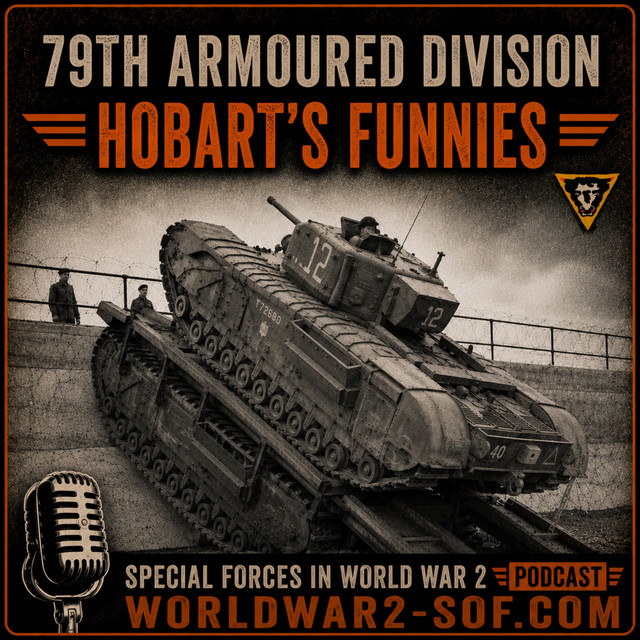
- 79th Armoured Division. Hobart's FunniesIn this episode of The Special Forces in World War II Podcast, host Michael Weyers explores the remarkable history of the 79th Armoured Division — one of the most innovative and influential Allied formations of the Second World War.Created under Major-General Percy Hobart, the division became the home of the famous “Hobart’s Funnies”: specialised armoured vehicles designed to break through minefields, concrete defences, waterfront obstacles, and fortified towns. From the assault beaches of Norma
- History of the Duplex Drive TanksIn this episode, we explore one of the most ambitious and unlikely armoured innovations of the Second World War: the Duplex Drive (DD) amphibious tank. Developed by engineer Nicholas Straussler and perfected under the 79th Armoured Division, the DD tank combined a standard armoured vehicle with a collapsible flotation screen and propeller system—allowing it to swim from landing craft to shore under its own power.This episode covers the complete history of the DD tank programme, including:• Early
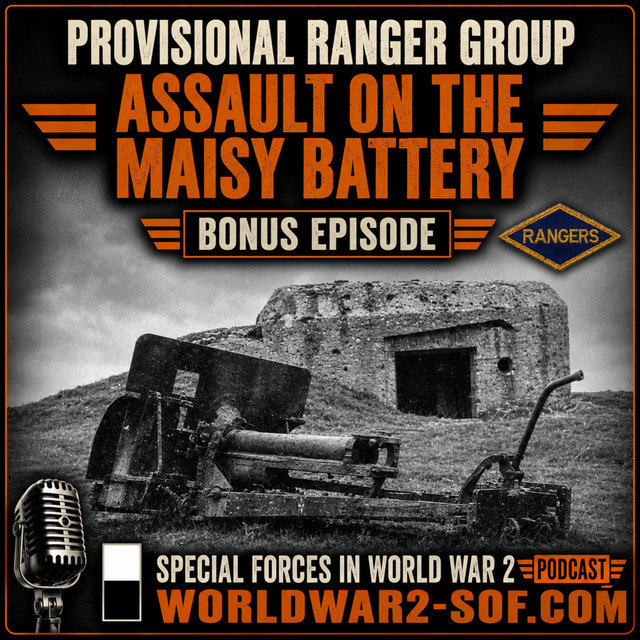
- Provisional Ranger Group, The Assault on the Maisy Battery, Bonus Episode.In this bonus episode of The Special Forces in World War II Podcast, we return to Normandy to follow the final chapter of the Provisional Ranger Force after D-Day.It is June 9th, 1944. Major Richard Sullivan leads the 5th Ranger Battalion, supported by elements of the 2nd, in a coordinated attack on the powerful German gun positions at Maisy, the twin batteries of Les Perruques and La Martinière.Through flooded fields, minebelts, and hidden trenches, the Rangers fight their way forward under hea
- Provisional Ranger Group, Force C rescue force to Pointe du Hoc, Part 5.On D-Day, June 6th, 1944, Ranger Force C, under Major Max Schneider, sails toward the Normandy coast. Comprising the 5th Ranger Battalion, Companies A and B of the 2nd Ranger Battalion, and the Ranger Cannon Platoon, the force faces a crucial decision: follow the planned assault on Dog Green Beach or divert west to relieve the hard-pressed Rangers at Pointe du Hoc.What begins as a carefully timed landing becomes chaos in heavy seas, broken radio contact, and fierce enemy fire. The episode follow
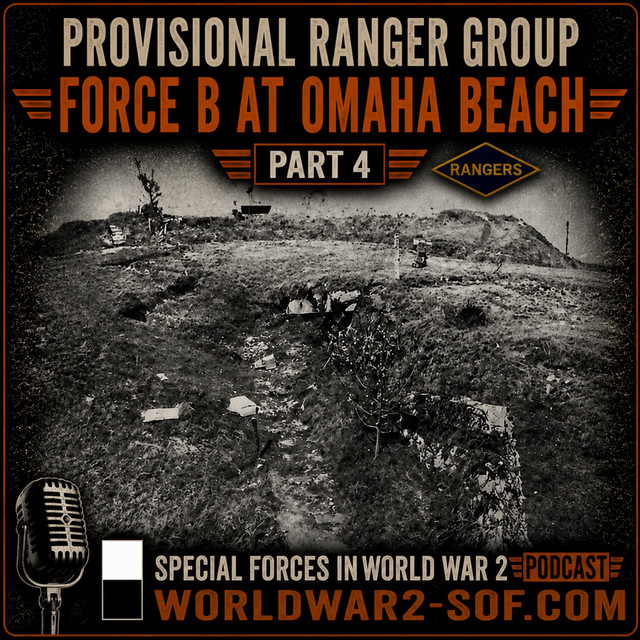
- Provisional Ranger Force, Force B at Omaha Beach, Part 4.Company C, 2nd Ranger Battalion (Force B), draws a distinct mission on D-Day: land on the extreme western end of Omaha’s Charlie Sector at H+3, smash Widerstandsnest 73 overlooking Dog Green/Charlie, then push west to clear Widerstandsnest 74 at Pointe de la Percée and link up toward Pointe du Hoc.We trace the hazardous pre-dawn run-in, the loss of one landing craft to anti-tank fire, and the brutal crossing under mortars and MGs. With fewer than half their number left, the Rangers reach the cli
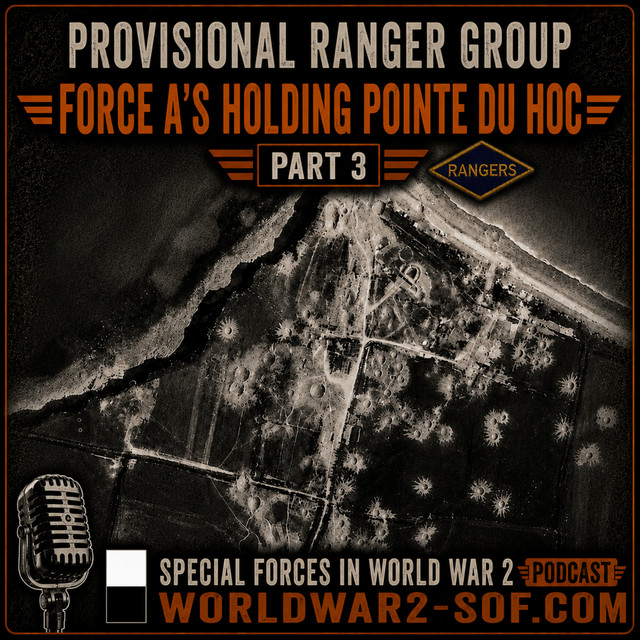
- Provisional Ranger Group, Force A's Holding Point du Hoc, Part 3.Continuing the five-part Provisional Ranger Group D-Day series, this episode covers the gritty aftermath at Pointe du Hoc. After the hidden 155 mm guns are found and disabled, Ranger teams split: some dig in on the shattered Point while others hold the inland highway under snipers, mortars, and counterattacks. With ammunition low and communications failing, Force A clings to the cliffs through the night of June 6–7 until relief arrives on June 8th, 1944. Courage, confusion, and a mission complet
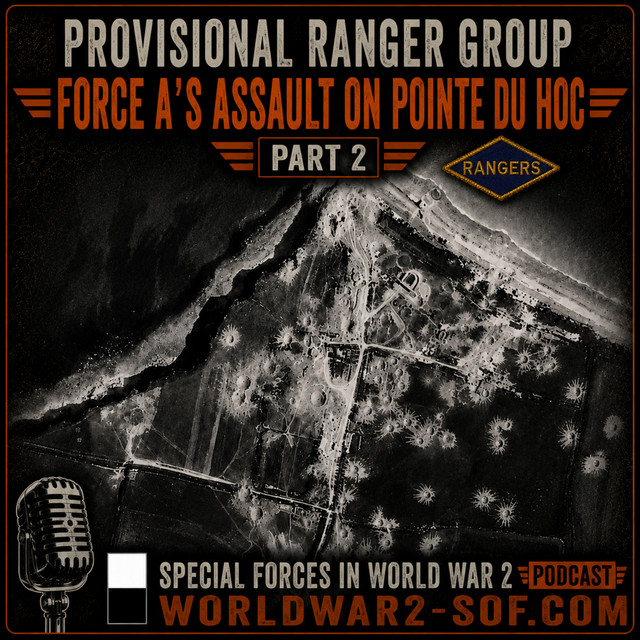
- Provisional Ranger Group, Force A's Assault on Pointe du Hoc, Part 2On the morning of June 6th, 1944, Ranger Force A of the Provisional Ranger Group sets out across rough seas toward one of the most dangerous objectives of D-Day: Pointe du Hoc. Packed into small landing craft, they face confusion, heavy surf, and enemy fire during their desperate run to the cliffs.This episode continues our five-part series on the Provisional Ranger Force during D-Day. We follow the Rangers from their transports to the shattered beach below Pointe du Hoc, a hazardous approach th
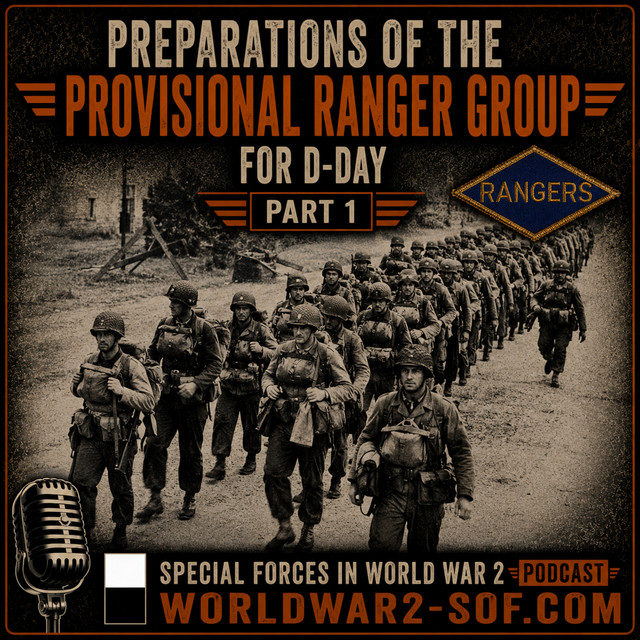
- Preparations of the Provisional Ranger Group for D-Day, Part 1.Before scaling the cliffs of Pointe du Hoc, the U.S. Army Rangers had to be forged into a single fighting force. In this first episode of our five-part series, we trace the preparations of the Provisional Ranger Group, from their arrival in Britain and training at the Assault Training Center, to secret equipment trials, planning debates, and final embarkation for D-Day.Discover how the 2nd and 5th Ranger Battalions were readied for one of the most dangerous missions of June 6th, 1944.For photogr
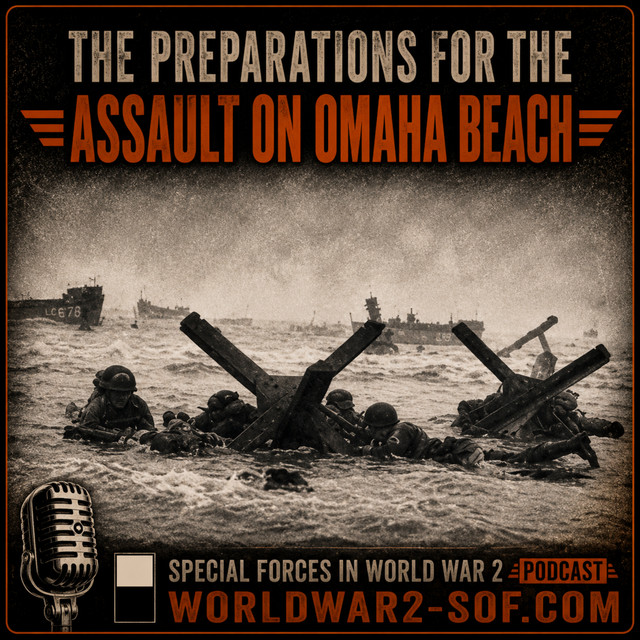
- The Preperations for the Assault on Omaha BeachThis episode takes you inside the planning, preparation, and execution of the Omaha Beach assault on June 6, 1944. From the strategic decisions that chose Omaha as a landing site, to the complex naval, air, and ground coordination required for the attack, we trace every step leading to the moment the first waves hit the beach. We reveal the challenges, sacrifices, and determination that defined one of the most pivotal battles of D-Day.#OmahaBeach #DDay #OperationOverlord #WWIIHistory #Normandy19
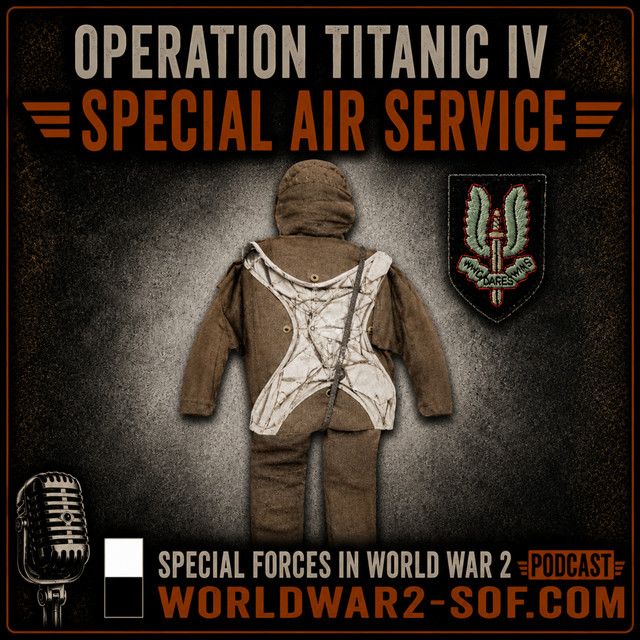
- Operation Titanic IV, Special Air ServiceStep into the shadows of deception with Operation Titanic IV, the daring first mission of the British Special Air Service in north-west Europe. Dropped behind enemy lines in the early hours of D-Day, a handful of elite operatives, armed with explosives, courage, and a few dozen sackcloth decoys called “Ruperts”, helped shape the course of history.This episode uncovers the covert mission, the dummy paratroopers that fooled the Wehrmacht, and the real-life drama that followed. From misdrops and re
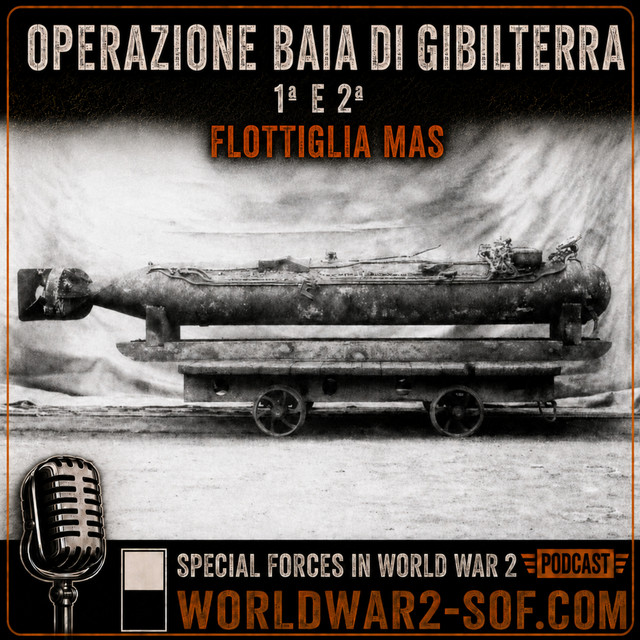
- Operazione Baia di Gibilterra 1 e 2In late 1940, the Italian Navy attempts one of the most daring sabotage missions of the Second World War, sending elite frogmen on manned torpedoes to infiltrate the heavily defended British naval base at Gibraltar.In this episode, we follow Operazione Baia di Gibilterra 1 e 2, a mission carried out not with fleets, but with stealth, endurance, and experimental underwater weapons.From the cold black waters off Spain to the decks of British battleships, this is the real story of Italy’s first und
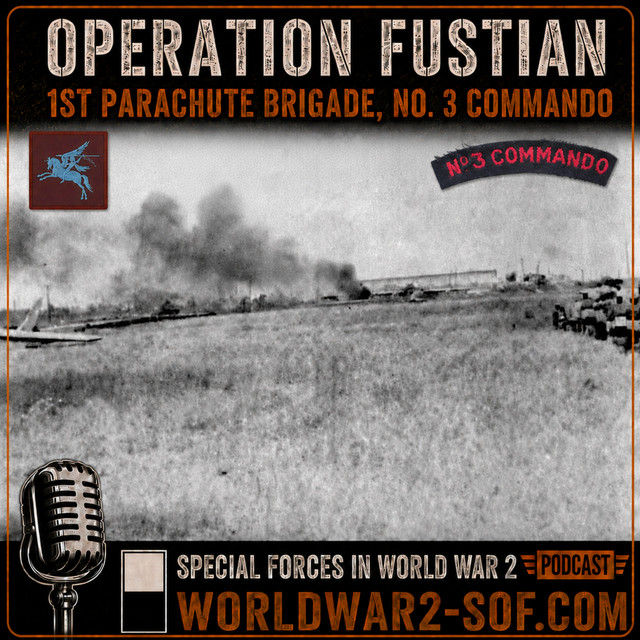
- Operation FustianOperation Fustian is one of the most ambitious and chaotic airborne operations of the Second World War. Join us as we explore the daring night assault by the 1st Parachute Brigade and No. 3 Commando, tasked with capturing the strategic Primosole and Malati Bridges in Sicily during the Allied invasion of July 1943.Discover how glider-borne artillery, elite paratroopers, and commandos battled exhaustion, confusion, and fierce German resistance to keep the road to Catania open. We cover the meticul
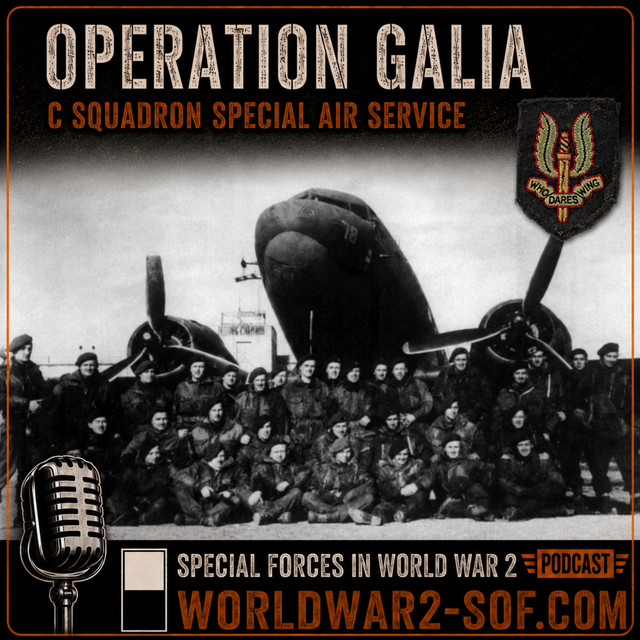
- Operation Galia, C Squadron, 2 Special Air ServiceIn the winter of 1944–1945, a 33-man detachment from C Squadron, 2 Special Air Service was dropped behind enemy lines in the Apennine Mountains of northern Italy. Their mission: disrupt German supply routes, support the Italian Resistance, and divert Axis troops from the Gothic Line.Operating under extreme conditions, with limited supplies and no guaranteed extraction, the SAS conducted sabotage missions, ambushes, and reconnaissance while constantly pursued by German and Fascist forces.This pod
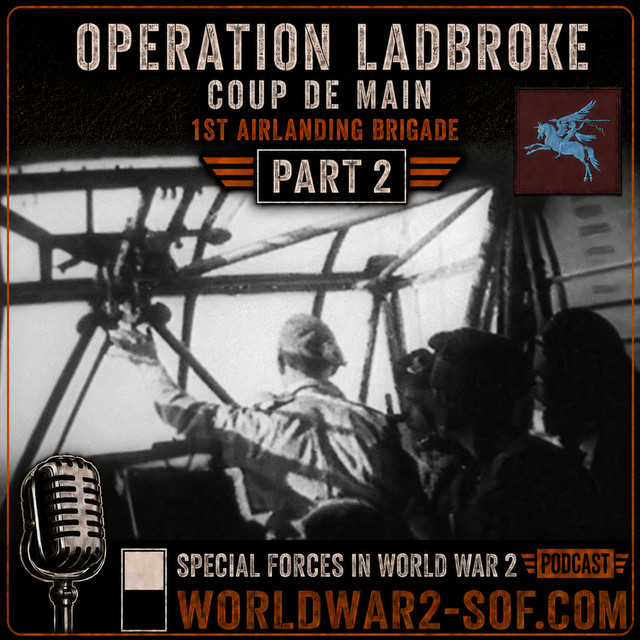
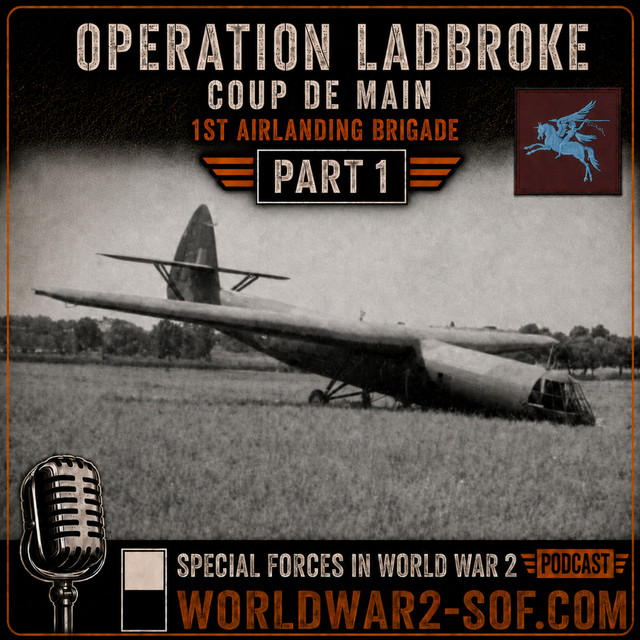
- Operation LadbrokeIn this episode of Special Forces in World War 2, we research Operation Ladbroke, the daring airborne assault that marked the beginning of the Allied invasion of Sicily in July 1943. This operation saw British glider-borne troops of the 1st Airborne Division attempt to capture key objectives around Syracuse, including vital bridges and coastal defences.Despite meticulous planning, the mission was fraught with challenges, high winds, navigational errors, and strong enemy resistance led to heavy l
- Operation Ladbroke, Coup de MainOn the night of 9th July 1943, British airborne troops launched Operation Ladbroke, a daring glider assault to seize the Ponte Grande and railway bridges in Sicily. A and C Companies of the 2nd Battalion, South Staffordshire Regiment led the coup-de-main raid, transported in Airspeed Horsa gliders to improve landing precision. Despite meticulous planning, the operation quickly descended into chaos.Gliders crashed into the sea, troops were scattered across enemy territory, and the airborne force,