Ways to join
Sleepy Philosophy Radio
$4.99/month
Listen without interruption. Members hear every episode with no ad breaks, so nothing pulls you out of sleep, study or thought. You also get members-only bonus episodes. Your membership directly supports the research and writing behind the show. Cancel anytime.
- Bonus episodes
- Early access
- Ad-free listening
For members only
97 episodes
- Is This the Best of All Possible Worlds? | Leibniz's TheodicyFall asleep to Gottfried Wilhelm Leibniz's Theodicy and his argument for the best of all possible worlds.Pierre Bayle asks whether reason can defend a good creator against the evil that creation contains. Gottfried Wilhelm Leibniz answers in the Theodicy, or Essais de Théodicée, with an argument about complete possible worlds and the choice of perfect wisdom. This longform essay gives both thinkers a serious hearing, tracing Bayle's Historical and Critical Dictionary, the Dictionnaire historique
- What Kierkegaard Meant by Despair | The Sickness Unto DeathFall asleep to Soren Kierkegaard's The Sickness Unto Death, the great book on despair and the self.This longform essay reads the book of eighteen forty-nine closely and in its own order, beginning with its famous opening definition, the self as a relation that relates itself to itself. It follows the diagnosis that Kierkegaard published under the invented name Anti-Climacus (Sygdommen til Doden in Danish), the synthesis of the infinite and the finite, the temporal and the eternal, freedom and ne
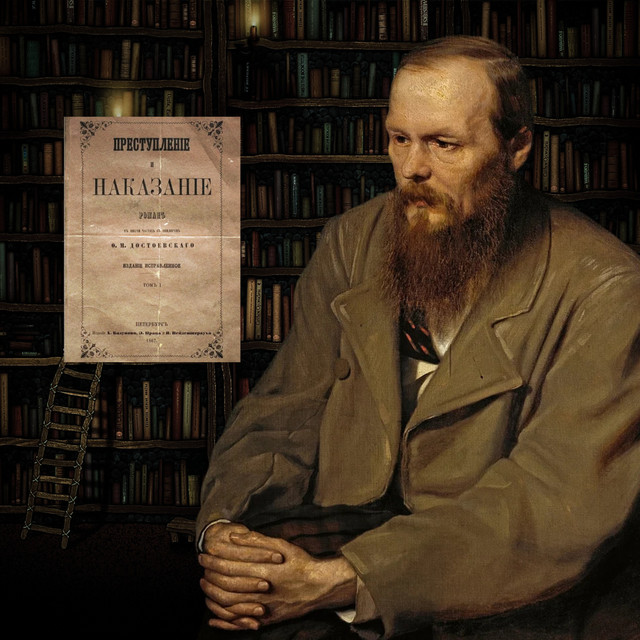
- Dostoevsky's Crime and Punishment | Can a Murder Ever Be Justified?Fall asleep to Fyodor Dostoevsky's Crime and Punishment, a close reading of guilt, conscience and moral permission.A student imagines that exceptional people may cross the moral boundaries binding everyone else. This essay follows Raskolnikov's extraordinary man theory through his published article, Porfiry's questions, the competing demands of poverty and pride, and the relationships his reasoning cannot fully explain. Sonya's care preserves responsibility instead of erasing it. Razumihin offer
- Camus vs Sartre | Is Life Absurd, or Are We Condemned to Be Free?Fall asleep to Albert Camus and Jean-Paul Sartre and The Rebel, a reading of absurdity, freedom, and revolt.Camus and Sartre began as friends and became public opponents over The Rebel. Their argument reaches deeper than the quarrel: Camus starts with the absurd and insists on revolt with limits; Sartre starts with radical freedom and asks what commitment to history requires. The reading follows their wartime friendship, the break, and the strongest version of each view. It asks how a person act
- The Universe Is Mental | The Kybalion's Seven Hermetic PrinciplesFall asleep to The Kybalion's seven Hermetic principles, usually attributed to William Walker Atkinson.The Kybalion places a living mind beneath the visible universe and presents seven principles for understanding existence. This carefully researched narration follows Mentalism, Correspondence, Vibration, Polarity, Rhythm, Cause and Effect, and Gender, giving each its own argument and concrete examples. It distinguishes the book's American New Thought setting from its claims of ancient authority
- Abandon All Hope | The History of Hell From Hades to DanteFall asleep to the history of hell and Dante’s Inferno, a reading of Hades, Sheol, and Dante’s Inferno.The idea of hell did not enter history in one finished form. This reading follows Egyptian judgment, Hebrew Sheol, Greek Hades, the Zoroastrian bridge, Gehenna, and arguments in early Christianity about the reach and duration of judgment. Dante gives the tradition its most enduring imaginative architecture; Milton, Swedenborg, and modern philosophers change its terms again. The focus stays on i
- Your Habits Are a Painkiller | Samuel Beckett's Complete PhilosophyFall asleep to the life and mind of Samuel Beckett, who made an art of failure, waiting, and going on.Born on a Good Friday in a comfortable Dublin suburb, a brilliant, restless young Irishman drifts to Paris, falls into the orbit of the greatest writer of the age, and spends a lost decade unable to find his own voice. Then a war, a betrayal, and years in hiding change him, and afterward, in a single astonishing burst, he writes the works that remake modern literature. This is the story of the m
- The Wisdom of Insecurity | Alan Watts's Philosophy for SleepFall asleep to the life and ideas of Alan Watts, the philosopher who taught the West how to let go.Across sixteen unhurried chapters, we follow the strange and luminous life of Alan Watts, the self-taught Englishman who became the most listened-to interpreter of Eastern wisdom the West has ever known. From a boyhood spent gazing at Chinese landscape paintings, through a brief and surprising career as a priest, to the houseboats and mountain cabins of California, we trace how a restless amateur t
- Beyond the Empty Will | Murdoch and Moral VisionIris Murdoch finds moral freedom in the patient work of seeing reality beyond the self.This episode follows The Sovereignty of Good as a triptych of moral inquiry. It begins with the inner change that occurs when a person learns to see another more justly, even without any outward action. It then follows Murdoch's account of prayer, Freud, grace, and the possibility of retaining moral transcendence after the traditional idea of God has faded. The final movement enters Plato's images of the sun a
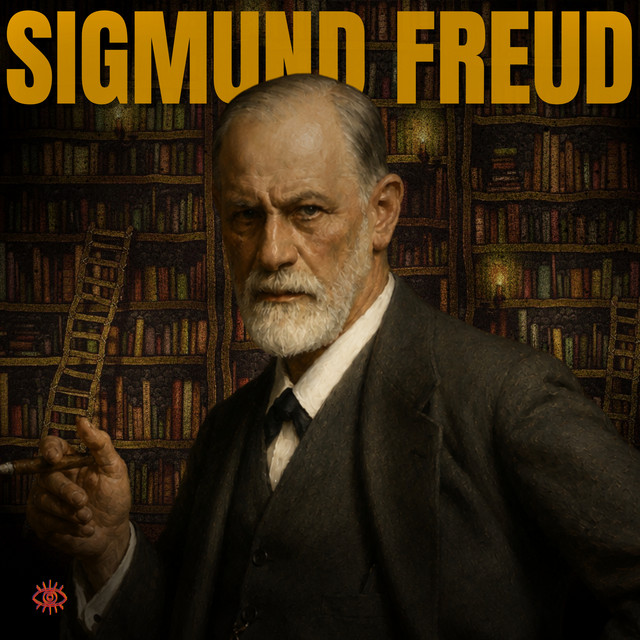
- There Are No Accidents | Sigmund Freud's Complete PsychologyFall asleep to Sigmund Freud, from a room full of buried gods to a chosen death in exile.He set out to be the coldest of scientists and ended by telling the strangest story modern people had ever heard about themselves. This is the life and the mind of Sigmund Freud. We begin in his consulting rooms in Vienna, among the ancient statues he could not work without, and follow him from a provincial childhood to the discovery that made his name, the claim that most of the mind is hidden, and hidden o
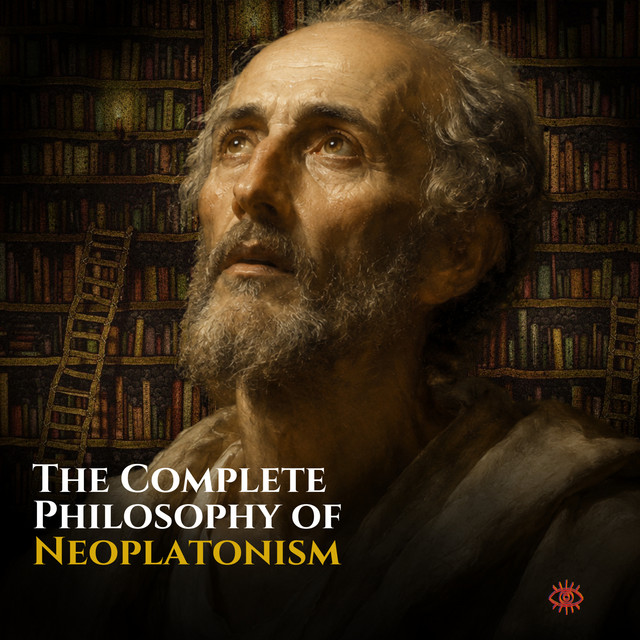
- All of Neoplatonism | Plotinus's Complete PhilosophyFall asleep to Plotinus, the mystic who taught that all things flow from a single source and long to return.In the third century, in the crowded city of Rome, a gentle teacher who was ashamed of his own body and would not sit for a portrait built the last great philosophy of the ancient world. This episode follows Plotinus, the founder of what we now call Neoplatonism, from his youth in Roman Egypt and his years with a secret master in Alexandria to the circle of devoted students who gathered ar
- Thank You for Listening | Membership on SpotifyThank you for listening, whether this is your first episode or your fiftieth.Our regular episodes are free for everyone, and they always take hours of reading and writing. If you'd like to support the show directly, you can become a member on Spotify. Members get our book episodes: each one takes a single book and walks through it, in our own words. On Spotify, members also hear every episode without ad breaks.To join, press play on any of our episodes with a lock, or use this link: https://memb
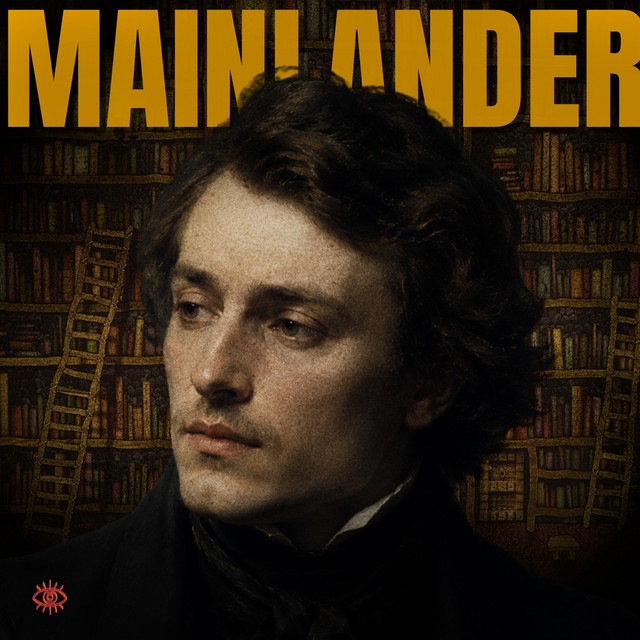
- The Darkest Philosopher Who Ever Lived | Philipp MainländerFall asleep to the story of Mainländer, the philosopher who taught that God has died and death is our redemption.In a rented room by a German river, a mild and dutiful bank clerk finished the strangest book of his century, and then quietly ended his own life. This episode follows Philipp Mainländer, the poet and philosopher who took Schopenhauer's darkness further than anyone had dared. We trace his single great work, The Philosophy of Redemption, and the idea at its heart, that God, before the
- Capitalist Realism for SleepWhy does capitalism feel inevitable even when its crises reveal how fragile it is?Mark Fisher's Capitalist Realism is a short, restless book about the strange feeling that capitalism is not merely dominant, but unavoidable. This episode follows Fisher's own sequence, from the futureless world of Children of Men and the performance of anti capitalism in Wall E, through the classroom where students experience reflexive impotence, the post Fordist demand for no long term, and the office where burea
- Let Go of God to Find God | Meister Eckhart's Complete PhilosophyFall asleep to the medieval mystic who taught ordinary people to pray to be rid of God.At the summit of the medieval Church, a Dominican master who governed dozens of religious houses did something no one of his rank had dared. He carried the deepest theology out of the Latin schools and preached it, in plain German, to nuns and weavers and widows. We follow him from an uncertain village in Germany to the heights of the University of Paris, and into the heart of what he taught, a God beyond all
- Montaigne | He Locked Himself in a Tower and Described Us AllFall asleep to Montaigne, who locked himself in a tower to study one man and quietly described us all.In fifteen seventy-one a French nobleman withdrew from public life to a round library at the top of a stone tower, and there, to tame his own restless mind, he began the strangest and most intimate book of its age. This is the story of Michel de Montaigne and the work he modestly called his attempts, the essays that invented a whole way of writing. We begin with his unusual life, the strange edu
- How to Stay Calm When Fortune Takes Everything | Boethius’s Complete PhilosophyFall asleep to the story of Boethius, the Roman philosopher who faced execution and answered it with reason alone.In a prison cell in the north of Italy, fifteen centuries ago, one of the most powerful men in the kingdom sat condemned to death and did something no one expected. He wrote a long conversation with Philosophy herself. Tonight we follow the whole of that life and that book. We trace Boethius from the heights of Roman honor to his fall on a false charge, through the vast project by wh
- The Work Camp Within | Han on Achievement and FatigueByung-Chul Han traces how freedom, productivity, and positivity turn inward, leaving the achievement subject exhausted by its own demands.Byung-Chul Han's The Burnout Society begins with a change in the pathology of our age, from infectious threats to neuronal illnesses born of excess. It then moves from Foucault's disciplinary institutions into the achievement society, where the command has become a promise of possibility. The middle of the book follows the consequences through scattered attent
- Life Is Worth Living | William James and the Sick SoulFall asleep to the life of William James, the invalid who became America's great philosopher of hope and belief.As a young man William James was so ill in body and mind that he could barely leave his room, and one spring evening he made a private decision that would shape everything after it. This episode follows the whole arc of his life and thought, from a wandering childhood in the most gifted family in America, through the collapse that nearly ended him, to the years when he founded a new sc
- Is Change Real? | Heraclitus vs Parmenides | Philosophy for SleepFall asleep to the oldest quarrel in philosophy, whether all things flow or nothing ever moves at all.Twenty-five centuries ago, two Greek thinkers gave opposite answers to the same question, and nearly every philosopher since has stood somewhere between them. This episode follows the quarrel from its beginning. We meet Heraclitus, the lonely riddler of Ephesus who hid his one book in a temple and taught that everything flows, that the world is a river and a living fire held in tune by a hidden
- No One Is Free Alone | Hegel and the Need to Be SeenFall asleep to Hegel, who watched an old world end and swore reason was moving through the ruin.Georg Wilhelm Friedrich Hegel was born into a modest world and rose, against long odds, to become the most commanding philosopher of his age, the last great thinker who dared to explain nearly everything as a single unfolding whole. This episode opens in a burning town, with an unknown lecturer carrying the only copy of his first masterpiece, and from there it traces the long climb of his life and his
- The Art of Loving by Erich FrommA quiet reading of Fromm's demanding claim that love must be learned like an art.This episode follows The Art of Loving in the order of Fromm's own argument. It begins with the book's startlingly practical question, whether love is an art that requires knowledge and effort, then enters the theory of love as the mature answer to human separateness. The reading moves through Fromm's account of parent and child, the distinct objects of love, brotherly love, motherly love, erotic love, self love, an
- Those Who Know Do Not Speak | The Hidden Teachings of Lao TzuFall asleep to the ancient Chinese way of yielding, water, and the wisdom of doing without forcing.More than two thousand years ago, in a China torn apart by endless war, an old man rode west on an ox, handed a gatekeeper a small book of verses, and disappeared into the mountains. That book, and the tradition it founded, is the subject of this long, slow episode. We begin with its legendary author and the strange little classic he left behind, then move into the heart of his teaching, the namele
- The Most Reluctant Convert | C.S. Lewis for Deep SleepFall asleep to the life and mind of C.S. Lewis, the atheist who became Christianity's most beloved modern voice.Over more than two hours, this longform episode traces the whole arc of a remarkable life and mind. We begin in a cold Belfast childhood and a wartime trench, follow a brilliant young atheist through the long, reluctant argument that led him back to belief, and settle in among the Oxford friendships that shaped him. From there we move slowly through the great works, the stab of longing
- How to Live Without Wasting Your LifeWilliam B. Irvine turns ancient Stoic exercises into a practical philosophy for meeting loss, uncertainty, anger, and mortality.William B. Irvine begins with the fear that a life can be spent striving without ever becoming fully one's own. He then follows Stoicism from its Socratic beginnings through Zeno, Seneca, Epictetus, Musonius Rufus, and Marcus Aurelius, before entering the book's practical heart. Negative visualization, the limits of control, fatalism, voluntary discomfort, and daily sel
- The Sword Was Never the Point | Miyamoto Musashi for Deep SleepFall asleep to the story of Miyamoto Musashi, the undefeated swordsman who laid down his blade to write.Born into the last years of Japan's long civil wars, a rough, motherless boy killed his first opponent in a duel at the age of thirteen and walked out onto the open road to test himself against the finest swordsmen in the land. This is the story of what he was really looking for. We follow him through the two duels that made him a legend, a broken dynasty of sword teachers in the old capital a
- Why We Fear Death | Ernest Becker’s The Denial of Death for SleepFall asleep to the story of Ernest Becker, who traced all human striving back to the fear of death.In a hospital bed on the Canadian coast, a dying man agreed to be recorded talking about death, the subject he had spent his whole life studying. This episode follows Ernest Becker, the anthropologist and outsider who was pushed from one university to the next and died at forty-nine, only weeks before his masterwork won the Pulitzer Prize. We trace his single great argument, that human beings are t
- Man Is Not a Piano Key | Dostoevsky's Notes from Underground for SleepFall asleep to the story of literature's first anti-hero, the sick and spiteful man who spoke the modern mind's secret.In the winter of a year that would take almost everyone he loved, a broke and grieving writer set loose the strangest voice in Russian literature, a nameless man in a rented corner who declares himself sick, spiteful, and free. This episode stays inside that single short book, Notes from Underground, and follows its narrator all the way down. We begin at the desk where it was wr
- No Man Can Save Himself Alone | Beauvoir's Ethics of AmbiguitySimone de Beauvoir asks what freedom can mean after alibis, idols, and innocence have fallen.This episode walks slowly through The Ethics of Ambiguity as Beauvoir builds an existentialist ethics out of finitude, failure, and action. It begins in postwar Paris, where the language of responsibility had become historically urgent, then follows the book's own structure from ambiguity and freedom into the moral attitudes that flee freedom, including seriousness, nihilism, adventure, and passion. The
- Is Life Worth Living? | Nietzsche vs Schopenhauer | Philosophy for SleepFall asleep to the story of the young Nietzsche, who worshipped Schopenhauer and spent his life trying to prove him wrong.As a lonely student, Friedrich Nietzsche found a dead philosopher's book on a bookshop table and fell under a spell that would shape everything he became. This episode follows the long, strange bond between Nietzsche and his first master, Arthur Schopenhauer, from devotion to open war. We meet the bitter, solitary Schopenhauer and his vision of a blind striving world where li
- The Power of Your Subconscious Mind | Joseph Murphy for SleepAn Irish boy left the priesthood, crossed an ocean, and built a new faith out of the human mind.This is the story of Joseph Murphy, the Irish-born minister whose single book on the subconscious mind has sold in the millions and has never left print. We begin with the boy who trained for the priesthood and lost his faith, the chemist who crossed an ocean, and the quiet preacher who found in a New York congregation a new American religion of the mind. From there we trace the tradition he inherited
- The Odyssey Explained: The Full Story and What It Really Means | For SleepFall asleep to Homer's Odyssey, a voyage through mortality, memory, identity, and the difficult meaning of home.Beginning with a man who refuses immortality, then entering the mystery of Homer and the firelit halls where singers carried the poem in memory, this longform episode follows Odysseus through the great trials of his return. It explores the dangerous power of names, the guest law, the cost of knowledge, the voices of the dead, and the fragile line between justice and revenge. Along the
- The Vanity of Existence | A Quiet Reading of Schopenhauer's Studies in PessimismBecoming a member keeps these episodes coming and unlocks the members only library of exclusive book summary episodes, a growing shelf of great books read closely and explained in plain language.Subscribe: https://creators.spotify.com/pod/profile/sleepyphilo/subscribeThe clearest pessimist in philosophy on suffering, time, death, and the strange consolation of expecting nothing.Studies in Pessimism gathers the darkest and most readable essays of Arthur Schopenhauer, selected from the late miscel
- If You Gaze Long Into an Abyss | A Complete Philosophy of the Existential CrisisWhy do people who have everything still wake at three in the morning certain that none of it means anything?This is a long, unhurried history of the moment the floor of ordinary life gives way. It begins with a celebrated novelist who, at the height of his fame and fortune, quietly hid a rope from himself, and from that single human crisis it opens outward across the centuries. We follow the confrontation with meaninglessness through the oldest scriptures and the calm arguments of antiquity, thr
- Why Humans Are Drawn to the Forbidden | Georges Bataille for SleepVote on what comes next: https://www.sleepyphilosophyradio.com/voteBecoming a member keeps these episodes coming and unlocks the members only library of exclusive book summary episodes, a growing shelf of great books read closely and explained in plain language.Subscribe: https://creators.spotify.com/pod/profile/sleepyphilo/subscribeBy day a mild librarian, by night the philosopher of excess, eroticism, and the sacred where reason ends.Georges Bataille kept one of the strangest double lives
- The Knight of Faith | A Slow Reading of Kierkegaard's Fear and TremblingA father is commanded to kill the son he loves, and is told by no one why.Fear and Trembling is Soren Kierkegaard's strange and beautiful meditation on the binding of Isaac, written under the borrowed name Johannes de Silentio against an age that believed it had outgrown faith. This reading walks through the whole of it, the preface that quarrels with its own century, the four imagined retellings of the journey to Moriah, the eulogy that praises a man it cannot understand, the knight of faith wh
- Best of All Is Never to Be Born | Antinatalism, a Complete Philosophy for SleepThe oldest, strangest verdict in philosophy, that it might be better never to have been born.Long before the word existed, the wisest voices of the ancient world kept arriving at the same strange verdict, that it might be better never to have been born at all. This episode follows that thought across the centuries, from a captured satyr and the chorus of a Greek tragedy to the systematic pessimism of Schopenhauer, who made suffering the ground note of existence. From there it moves through the s
- Heidegger Betrayed Him. Arendt Never Left. | Karl Jaspers Complete Philosophy for SleepA boy told he would die by thirty built a philosophy of openness that outlived two death sentences.Karl Jaspers trained as a doctor under the shadow of an early death, reinvented the study of the troubled mind, and then crossed quietly into philosophy to ask the largest questions a person can face. This episode follows his whole arc, from the cold northern coast where he was born, through the Heidelberg years and the marriage that shaped everything, to the ideas that made him one of the deepest
- Why Pythagoras Believed Everything Was a Number | Philosophy for SleepAround 600 BCE, on the island of Samos, a man declared something that sounded almost absurd: that everything in the universe, every object, every force, every living creature, is ultimately a number. Not described by number. Not measured by number. But number itself.This three-hour exploration follows Pythagoras from his mysterious origins on Samos through his travels to Egypt and Babylon, the secret community he founded in southern Italy, and the mathematical discoveries that would reshape how
- One Moment of Happiness | Dostoevsky's White NightsFour luminous nights in a city where the sun never sets, a lonely dreamer, and a young woman waiting for another man.White Nights is Dostoevsky's early, tender story of four summer nights in Petersburg, told by a man who lives almost entirely inside his own head.This reading follows the whole of it, the dreamer who knows the city's houses better than its people, the weeping girl he meets at the canal railing, his strange confession of what a dreamer really is, her own story of a life pinned to a
- "Led by an Invisible Hand" | Adam Smith Complete Philosophy For SleepHe wrote the book that built the modern world, then spent his last days making sure most of the rest was burned.Adam Smith was the gentle, absent-minded son of a Scottish customs official, and he became the most misread thinker in the history of economics.This episode follows the whole arc: the quiet port town of Kirkcaldy and the mother he never left, the miserable years at Oxford, the Glasgow lecture rooms where he was happiest, and the long silent decade by the sea in which he wrote the Wealt
- The Inner Citadel | Meditations by Marcus AureliusThe most powerful man in the world wrote a private notebook telling himself how to live, and never meant a single line of it to be read.Meditations is the night writing of Marcus Aurelius, Roman emperor and Stoic, set down by lamplight in military camps along the empire's cold northern frontier.This reading walks through the whole of it, the debts he owed to the people who formed him, the inner citadel of the mind that no enemy can take, the river of time in which nothing holds still, the discip
- Emily Dickinson on Death, Immortality and the Inner World | For SleepShe died unknown, leaving eighteen hundred poems in a locked box. This is the mind that hid them.In May of 1886, a woman almost nobody knew died in a brick house in Amherst, Massachusetts, and her sister found a locked box holding the largest secret in American literature.This episode begins inside that discovery and follows the whole life that produced it, the girl who would not stand for Christ at Mount Holyoke, the white-dressed woman who chose a locked door as a vocation, the letters that bu
- Thus Spoke Zarathustra by NietzscheA hermit comes down from his mountain to give humanity his hardest gift, and learns that almost no one can bear to take it.Thus Spoke Zarathustra is Nietzsche's strange counter-scripture, written in feverish bursts in mountain villages and along the Italian coast while its author lived alone and nearly unread.This reading follows the prophet down from his mountain into a marketplace that laughs at him, through the great speeches of the overman and the last man, the camel, the lion, and the child
- The Problem of Evil: Why God Allows SufferingAn innocent man, a burned fawn, and the hardest question ever asked of God.This episode follows the problem of evil from its oldest telling to its newest defenses. It begins with a man who loses everything in a single afternoon and refuses every easy explanation, then traces the great answers, evil as absence, the best of all possible worlds, and the earthquake and the novel that broke optimism's public standing.From there the argument sharpens into the twentieth century, a charge of outright co
- Anna Akhmatova on Poetry, Suffering and Survival | For SleepShe answered terror with a poem too dangerous to write down, and the poem outlived the state that banned it.This episode follows Anna Akhmatova from a childhood in Pushkin's town outside Petersburg, through the cellar cabarets where a new Russian poetry was made, to the love lyrics that made her the most famous woman in Russian literature before she was thirty.Then the century turns. A husband is executed, a son is taken, and an unofficial ban erases her name from print for fifteen years. We tra
- Wittgenstein, the Man Who Ended Philosophy TwiceThe richest heir in Vienna gave everything away and kept only the hardest questions ever asked about language.Ludwig Wittgenstein was born into one of the wealthiest families in Europe and died telling his friends he had lived wonderfully, though almost nothing in between looks like happiness.This episode follows the whole arc: the palace in Vienna and the family tragedies, the flight from engineering into logic, the masterpiece written in the trenches of the First World War, and the lost decade
- Fyodor Dostoevsky's Crime and Punishment | Book SummaryVote on what comes next: https://www.sleepyphilosophyradio.com/voteA slow walk through the novel in which a theory is put to the test with an axe.This episode traces Fyodor Dostoevsky's Crime and Punishment from the Wiesbaden hotel room where it was drafted in the summer of 1865 to the Siberian riverbank where it ends. We follow Rodion Raskolnikov from the rehearsal in the pawnbroker's apartment, through the murder and the long delirium that follows, into the cat and mouse interviews with the in
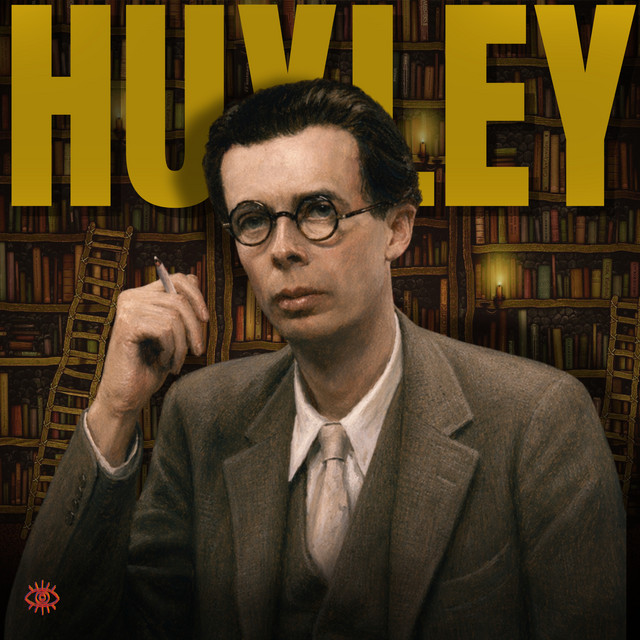
- Aldous Huxley | The Prophet Who Predicted Our Modern WorldVote on what comes next: https://www.sleepyphilosophyradio.com/voteThe real danger was never the boot on the face.In this episode, we trace the full arc of Huxley's life and thought, beginning with the prophecy he delivered in Brave New World and ending with the afternoon of his death in Los Angeles on the day John F. Kennedy was shot. We follow him from Godalming to Eton, from the eye infection that nearly blinded him at sixteen to the satirical novels of the 1920s that made him the cleverest y
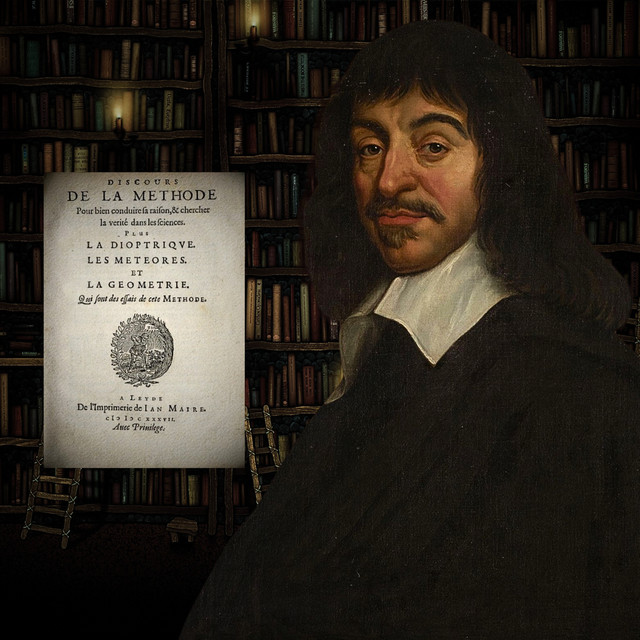
- Rene Descartes's Discourse on the Method | Book SummaryThis is a members only episode. Subscribing helps the channel and unlocks these episodes as they are released.Subscribe: https://creators.spotify.com/pod/profile/sleepyphilo/subscribeA French philosopher in the Dutch Republic once wrote, in his own language, how he rebuilt knowledge from doubt.This episode walks listeners through the six parts of René Descartes's Discourse on the Method, published in sixteen thirty-seven. It opens with the Dutch years in which the book was composed and the decis