Ways to join
Literature and History Bonus Episodes
$20.00/month
- Bonus episodes
For members only
39 episodes
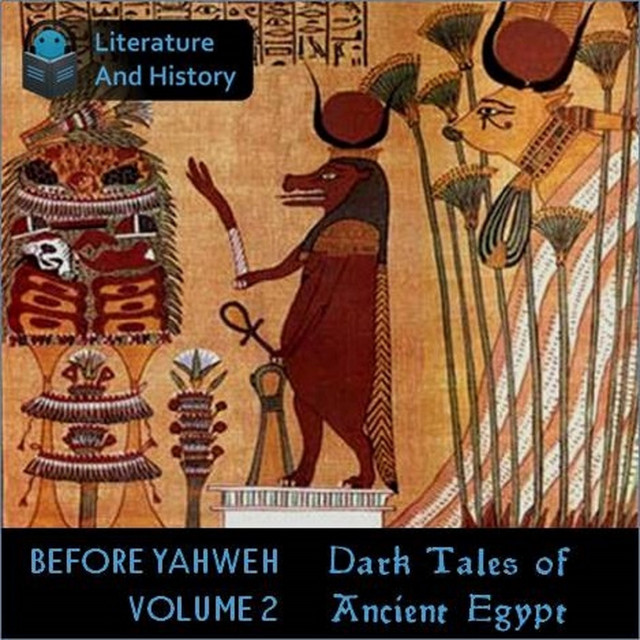
- BY 2: Dark Tales of Ancient EgyptBefore Yahweh, Volume 2: Dark Tales of Ancient Egypt | Ancient Egypt had its own version of the Odyssey, together with numerous stories involving black magic and blood and thunder revenge. Ancient Egyptian fiction is unique even within the culturally unfamiliar world of the Middle and Late Bronze Ages. In this show, we look at “The Wax Crocodile” (c. 1600 BCE), “The Story of Sinuhe” (c. 1900 BCE) and “The Tale of Two Brothers” (c. 1200 BCE). While these tree tales are fun to read in their own ri
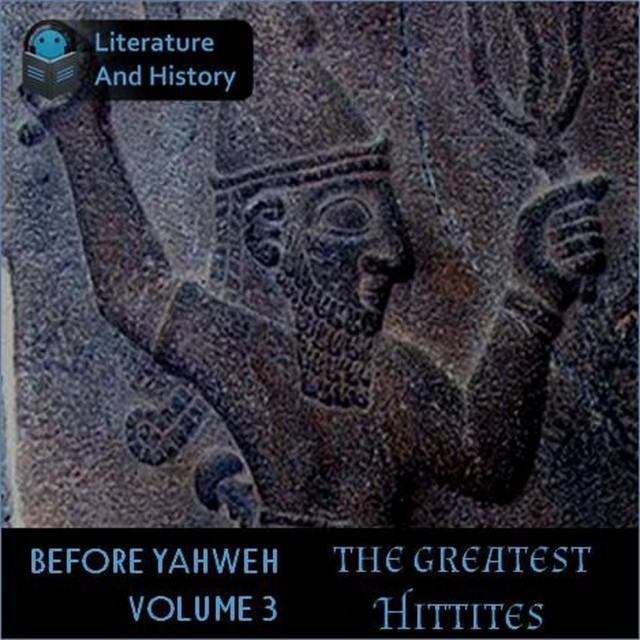
- BY 3: The Greatest HittitesBefore Yahweh, Volume 3: The Greatest Hittites | A bizarre male pregnancy. The seduction of sea monsters and rocks. Talking fetuses. The great Kumarbi Cycle of ancient Turkey, while it has dozens of parallels to contemporaneous myth cycles, also has some unique quirks that make reading it a huge amount of fun. In the mid 1300s, the Hittites, based in modern day Turkey, were one of the two most powerful empires in the ancient world, clashing swords with Egypt for control of the eastern part of th
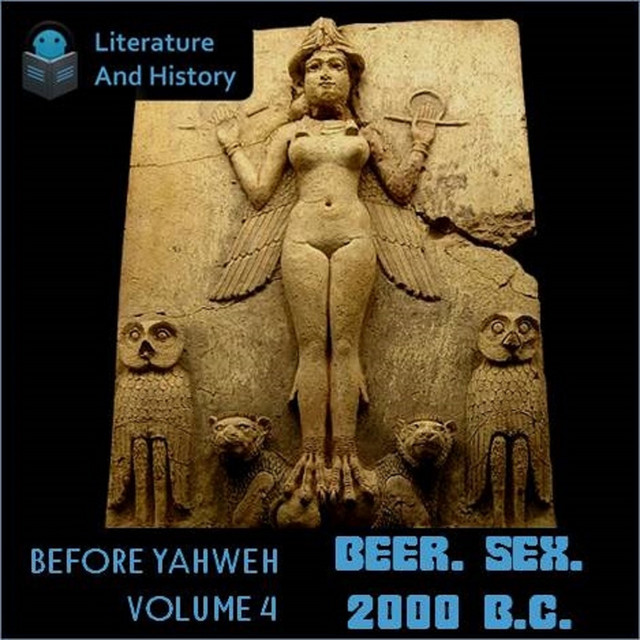
- BY 4: Beer. Sex. 2000 B.C.Before Yahweh, Volume 4: Beer. Sex. 2000 B.C. | The goddess known as Inanna, who later became Ishtar, was a central figure in Mesopotamian religion for 2,500 years. The deity of war and passion, Inanna’s tales are violent, lurid, and exciting, and in this show we will read the full epic of Inanna and Dumuzi, dated some time to the 2,000s BCE. The story, complete with beer, a huge amount of sex, monsters, a journey to the underworld, and an enigmatic act of revenge, is a riot to read. And in the
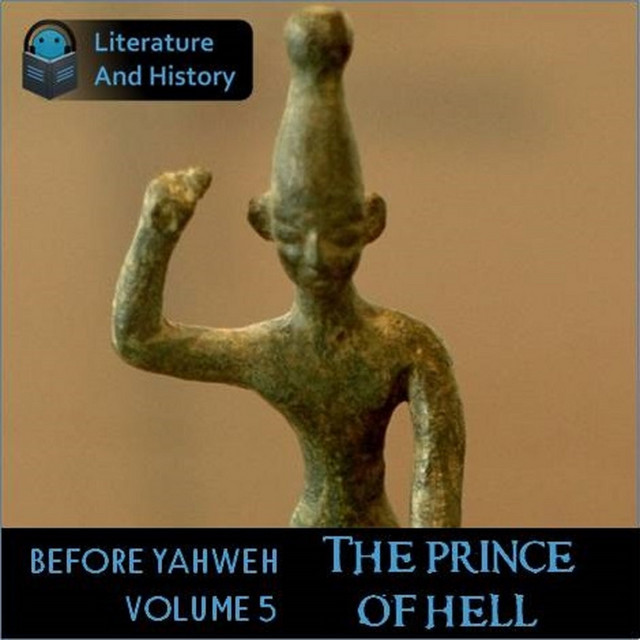
- BY 5: The Prince of HellBefore Yahweh, Volume 5: The Prince of Hell | No other deity in the Old Testament gets maligned as much as Baal, an ancient Canaanite god who dates back to the Middle Bronze Age. Demonologist Collin de Plancy remarked that Baal was a devil, with a dominion “broad and deep in hell.” And yet since the 1930s, with the uncovering of the ruins of the ancient Canaanite city of Ugarit, we’ve learned quite a bit about Baal. The library at Ugarit, with its thousands of clay tablets, was one of the great
- TAA 1: Esther: The Director's CutThe Astounding Apocrypha, Volume 1: Esther: The Director's Cut | Esther, the compromised heroine, part concubine, part schemer, and part savior, has been a source of fascination to readers for thousands of years. Her story is one of the great tales of an diasporic immigrant – an immigrant locked into an alien world and forced to do what she has to in order to survive. In this episode, we look at the two different versions of the Book of Esther – both the stripped down narrative in Hebrew and Pro
- TAA 2: The Book of TobitThe Astounding Apocrypha, Volume 2: The Book of Tobit | Join Tobit, and his son Tobias, for a journey through modern day Iraq and Iran – a tale complete with angels, a demonic curse, a perilous wedding night, a loyal pet dog, and the most famous injury ever to be caused by bird poop. The gentle, seriocomic tale of Tobit is one of the best stories of Second Temple Judaism. With its inclusion of Raphael, and seven angels, and the demon Asmodeus, the Book of Tobit unmistakably shows the influence o
- TAA 3: Daniel: The Director's CutThe Astounding Apocrypha, Volume 3: Daniel: The Director's Cut A courtroom drama revolving around sex and blackmail. Bloodthirsty Babylonian kings. Prophetic visions of monsters. Honest young men, tossed into furnaces and lions’ dens. And to some, a clear prophecy about the coming of Christ. There are many reasons to read the Book of Daniel, the youngest book in the Hebrew Bible, probably produced during the 160s BCE in Jerusalem. But it’s also an exceptionally difficult book. In this episode, w
- TAA 4: All the MaccabeesThe Astounding Apocrypha, Volume 4: All the Maccabees | Judas Maccabeus, whose nickname means “hammer,” is the war hero at the center of the great cycle of the Maccabees, a story about a small, controversial sect who fought an aggressive Greek regime in Jerusalem in the 160s, and won. There are four books of the Maccabees, and they range from mostly history (1 Maccabees) to propagandistic history (2 Maccabees) to historical fiction (3 Maccabees) to grisly martyr stories (4 Maccabees). In this sh
- TAA 5: JudithThe Astounding Apocrypha, Volume 5: Judith | The bible has a number of female heroines – patient and attentive Ruth, resilient Esther, honest Susanna, and before them all the judge Deborah and her lieutenant Jael. But more than any of these, Judith, heroine of her eponymous apocryphal book in the Old Testament, acts with a confidence, cunning, and savage violence that has few analogs in any of the biblical canons. In this episode, we begin by hearing the story of the Book of Judith and the respo
- MGP 1: East and WestMore Greek Plays, Volume 1: East and West | Aeschylus’ play The Persians is the earliest full work of world theater. Being an Ancient Greek play, we might expect a piece about Heracles or Zeus, but The Persians is nothing so simple as this. Unlike the other surviving works of Ancient Greek tragedy, The Persians is a piece of historical fiction. Written in 472 BCE – just a few years after Aeschylus’ generation won the Greco-Persian Wars, The Persians imagines the Persian side of the war during it
- MGP 2: DefianceMore Greek Plays, Volume 2: Defiance | The play Prometheus Bound was once attributed to Aeschylus, but increasingly a consensus has shifted to suggested that this enigmatic play may have been written by someone else. The play tells the grim story of the beginning of Prometheus’ incarceration – how after he brought fire and the gifts of civilization to humanity, he was shackled to a rock at the edge of the known world by a wrathful and jealous Zeus. Once part of a trilogy – though we’re not sure
- MGP 3: Second BestMore Greek Plays, Volume 3: Second Best | Ajax the Great, or Telamonian Ajax, is in many ways the most overwhelming fighter in the Homeric epics. He beats the Trojan champion Hector multiple times. He is the center of the Greek defense and offense for nearly twenty books of the Iliad as Achilles sits out. He not only does not receive, but pointedly refuses divine aid, fighting with the strength of his own arms all of the others in his echelon – most notably Hector and Achilles, receive lavish am
- MGP 4: Cloud CuckoolandMore Greek Plays, Volume 4: Cloud Cuckooland | In this signature work of Old Comedy, a couple of schmucks from Athens take over the universe. Of all of Aristophanes’ plays, The Birds might have the most extravagant plot, being the story of a pair of unexceptional Athenian vagabonds who befriend the bird kingdom and then enjoy an astonishing rise in power and fortune. Originally a musical with unusually high production values, The Birds once chirped and pirouetted with gorgeous song and dance, bu
- MGP 5: Beyond Comedy and TragedyMore Greek Plays, Volume 5: Beyond Comedy and Tragedy | This final installment in the More Greek Plays bonus sequence focuses on Euripides’ play Ion, though it also covers his plays Iphigenia at Tauris and Helen. This trio of late Euripides’ plays had a profound influence on Greek new comedy and republican Roman drama, and eventually, the first surviving novels from literary history. Ion, Iphigenia at Tauris, and Helen are tragicomic pieces about young people bruised by the injustices of history
- CR 1: Mothers of GodsChristianity's Roots, Volume 1: Mothers of Gods | Isis, mother of Horus and wife of the tragically murdered Osiris, was one of the most popular deities in the Ancient Mediterranean, long before Old Testament was begun. Archaeological evidence and texts in the archive demonstrate that by the life of Jesus, her followers pervaded the Roman empire, worshipping a mother goddess whose most salient quality was agape, that same unconditional love we hear so often in the New Testament. Isis’ history ext
- CR 2: The Mystery ReligionsChristianity's Roots, Volume 2: The Mystery Religions | The mystery religions are so named for a reason – with exclusive membership, carefully enforced rules for keeping secrets, and often very few textual remnants, they remain largely enigmatic. However, through a survey of archaeological and textual information, we can nonetheless make some very compelling observations about what the mystery religions were, and what their adherents did. In this bonus program, beginning with the Eleusinian Myst
- CR 3: HarmonyChristianity's Roots, Volume 3: Harmony | Throughout the 500s and 400s BCE, the Pythagorean and Orphic cults came into prominence, both influencing Plato, and thereafter, independently and through Platonic philosophy, having a broad base in the Mediterranean for nearly a thousand years after. Together, the cults promoted the ideas of resurrection, personal purity and asceticism, and the notion that one might escape from the cycle of earthly incarnation and into something more permanent. The Pyth
- CR 4: Plato and JesusChristianity's Roots, Volume 4: Plato and Jesus | As we have observed from time to time in Literature and History, perhaps no one individual other than Saint Paul and Jesus himself had an influence on Christianity as important as Plato did. This program explores some of the details of why that is the case. While this bonus episode takes a wide look at many passages from the Platonic dialogues that support his theory of forms and the related doctrine of innate knowledge, four Platonic texts in pa
- CR 5: Pharisees, Sadducees, EssenesChristianity Roots, Volume 5: Pharisees, Sadducees, Essenes | Beginning around 160 BCE, we begin to have historical evidence of several splinter groups within Judaism. Several ancient sources, chiefly Josephus, tell us about how the Pharisees appeared in the 160s as a force within Judaism urging nativism and anti-assimilation around the time of the Maccabean revolt, and the Sadducees, wealthier and more amenable to Greek culture, around the same time. The theological history of these two sects,
- TRS 1: The Books of EnochThe Rejected Scriptures, Volume 1: The Books of Enoch | The book of 1 Enoch, produced between roughly 170 and 100 BCE, is quite possibly the most remarkable apocryphal scripture on Earth – apocryphal in all canons except for the Ethiopian Orthodox Tewahedo canon, in which it survived for some 1,500 years before coming into wider circulation in the nineteenth century. A multi-part tale, 1 Enoch tells of dark angels called the Watchers who descended to couple with human females, of demon lords who
- TRS 2: JubileesThe Rejected Scriptures, Volume 2: The Book of Jubilees | Jewish and Christian sacred writings are full of revisions – Deuteronomy revises Leviticus, Chronicles revises Kings, and Matthew and Luke revise Mark. In the case of the Book of Jubilees, this text, likely a product of the Hasmonean Dynasty of the late 100s BCE, is a revision of the Book of Genesis. Lost to most of the world for some 1,500 years, Jubilees came back into broader circulation from the Ethiopian Orthodox Tewahedo Canon in th
- TRS 3: All the GospelsThe Rejected Scriptures, Volume 3: All the Gospels | Saint Anne. Mary and Joseph. Nicodemus. Mary Magdalene. Pontius Pilate. Joseph of Arimathea. A pious thief and a wicked thief. The harrowing of hell. During and after the second century CE, Christian writers produced dozens, and likely hundreds, of apocryphal gospels, many of which survive in some form today. These additional Gospels offer countless add-on narratives about the life and times of Jesus and the people in his world – his parents a
- TRS 4: The Apocryphal ActsThe Rejected Scriptures, Volume 4: The Apocryphal Acts | The canonical Acts of the Apostles is a tremendous part of the New Testament, but there were also many apocryphal acts books – Acts of John, Acts of Paul and Thecla, Acts of Peter, Acts of Thomas, and more. In this bonus program, we review four of the major surviving apocryphal acts books, culminating in the novel-length Acts of Thomas, in which the titular apostle travels all the way to India to proselytize. While these non-canonical narr
- TRS 5: All the ApocalypsesThe Rejected Scriptures, Volume 5: All the Apocalpyses | There is one apocalypse in the New Testament. But Revelation lacks much of what we expect to find in the Bible – Revelation’s doctrine of salvation is by works, rather than faith, its judgment day depicts a corporeal resurrection, and neither Revelation nor anything in Bible explains posthumous individual sentencing to heaven or hell, and how this works. And while Satan makes an appearance in Revelation, we’re not told what he is, or why a
- TAFN 1: Joseph and AsenethThe Actual First Novels, Volume 1: Joseph and Aseneth | The Greco-Jewish novel Joseph and Aseneth, now tentatively dated to the late Ptolemaic period, is about the biblical Joseph, how he met his Egyptian wife Aseneth, how she fell for him and they got married, and how some adventures befell them afterward. While Joseph and Aseneth isn’t commonly included in discussions of ancient Greek fiction among classicists, Joseph and Aseneth is a novel that reminds us that dozens of apocryphal and pseudep
- TAFN 2: CallirhoeThe Actual First Novels, Volume 2: Callirhoe | Volume 2 of The Actual First Novels covers the ancient Greek novel Callirhoe. Dated to about 50-100 CE, Callirhoe is, like many other works of ancient fiction, a romance novel. A beautiful heroine meets a handsome hero, they fall in love, and after a series of harrowing adventures, they are reunited and live happily ever after. However, more than any other ancient Greek romance novel, Callirhoe is surprisingly dark at times. Trickery and a gruesome
- TAFN 3: An Ephesian TaleThe Actual First Novels, Volume 3: An Ephesian Tale | The third volume of The Actual First Novels is on Xenophon of Ephesus’ Ephesian Tale, a book generally dated to the 100s CE. An Ephesian Tale is one of those texts that is so stunningly terrible that is an absolute blast to read. A three-ring circus of sex and violence, in which a young couple from Ephesus careens all over the ancient Aegean in a series of completely implausible adventures, An Ephesian Tale proves that erotic prose literature
- TAFN 4: Leucippe and ClitophonThe Actual First Novels, Volume 4: Leucippe and Clitophon | The fourth volume of The Actual First Novels covers a book called Leucippe and Clitophon, penned by an author named Achilles Tatius, probably in the late 100s CE. Leucippe and Clitophon, written perhaps a hundred years after Callirhoe, demonstrates a change in the genre of the ancient romance novel. In a word, Leucippe and Clitophon is more ironic, more satirical, and more self-conscious than its predecessors. It serves up the genre’s c
- TAFN 5: Daphnis and ChloeThe Actual First Novels, Volume 5: Daphnis and Chloe | Daphnis and Chloe is probably the best known ancient Greek novel. The story of a goatherd and a shepherdess, Daphnis and Chloe takes place on the island of Lesbos. Unlike other ancient Greek romantic adventure novels, Daphnis and Chloe doesn’t toss its hero and heroine all over the known world and cram them into a series of absurd adventures and coincidences. Instead, Daphnis and Chloe is a pastoral love story, in which a couple of teenagers
- RGM 1a: PerseusRad Greek Myths, Volume 1a: Perseus | Volume 1 of Rad Greek Myths includes more than four hours of epic battles and adventures. Perseus and Theseus, aside from Heracles, were the most famous heroes in Ancient Greek mythology, and this volume tells all of their famous stories. Perseus, one of the earliest heroes of Greek mythology, was cast out to sea with his mother Danae while still a baby boy. Although the two found safety with a fisherman named Dictys, soon Perseus was sent on a dreadful ques
- RGM 1b: TheseusRad Greek Myths, Volume 1b: Theseus | Volume 1 of Rad Greek Myths includes more than four hours of epic battles and adventures. Perseus and Theseus, aside from Heracles, were the most famous heroes in Ancient Greek mythology, and this volume tells all of their famous stories. Perseus, one of the earliest heroes of Greek mythology, was cast out to sea with his mother Danae while still a baby boy. Although the two found safety with a fisherman named Dictys, soon Perseus was sent on a dreadful ques
- RGM 2a: Daedalus and IcarusRad Greek Myths, Volume 2a: Daedalus and Icarus | Volume 2 of Rad Greek Myths includes the tales of Daedalus and Icarus, and Demeter and Persephone, parents and children whose love and connections with one another enable them to do extraordinary things. Daedalus’ story, up first, is a full account of the most famous engineer in Greek mythology, an Athenian exiled to Crete after a dreadful mistake, and forced to work on the baleful labyrinth of King Minos. The story of Daedalus’ great project, an
- RGM 2b: PersephoneRad Greek Myths, Volume 2b: Persephone | Volume 2 of Rad Greek Myths includes the tales of Daedalus and Icarus, and Demeter and Persephone, parents and children whose love and connections with one another enable them to do extraordinary things. Daedalus’ story, up first, is a full account of the most famous engineer in Greek mythology, an Athenian exiled to Crete after a dreadful mistake, and forced to work on the baleful labyrinth of King Minos. The story of Daedalus’ great project, and his spe
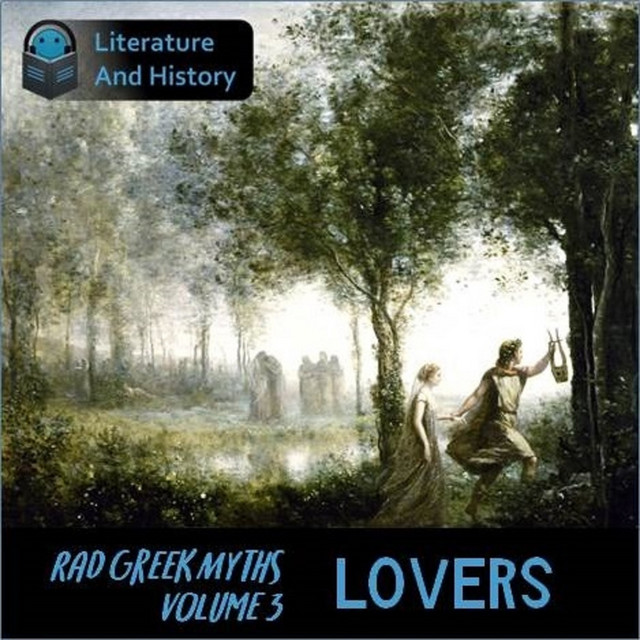
- RGM 3a: Orpheus and EurydiceRad Greek Myths, Volume 3a: Orpheus and Eurydice | Volume 3 of Rad Greek Myths tells the tales of two very different pairs of lovers – Orpheus and Eurydice, and then Baucis and Philemon. The story of Orpheus and Eurydice tells of Greece’s most famous lyre player – his early adventures with the Argonauts, his great musical ability, his pivotal romance with a woman very different from him, and what happened afterward. Featuring sirens, the Cerberus, ghosts, and Hades himself, Orpheus’ story has bo
- RGM 3b: Baucis and PhilemonRad Greek Myths, Volume 3b: Baucis and Philemon | Volume 3 of Rad Greek Myths tells the tales of two very different pairs of lovers – Orpheus and Eurydice, and then Baucis and Philemon. The story of Orpheus and Eurydice tells of Greece’s most famous lyre player – his early adventures with the Argonauts, his great musical ability, his pivotal romance with a woman very different from him, and what happened afterward. Featuring sirens, the Cerberus, ghosts, and Hades himself, Orpheus’ story has bot
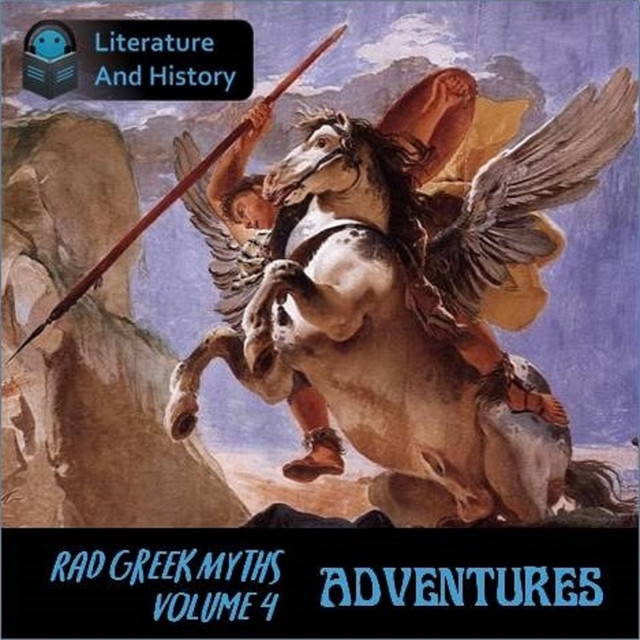
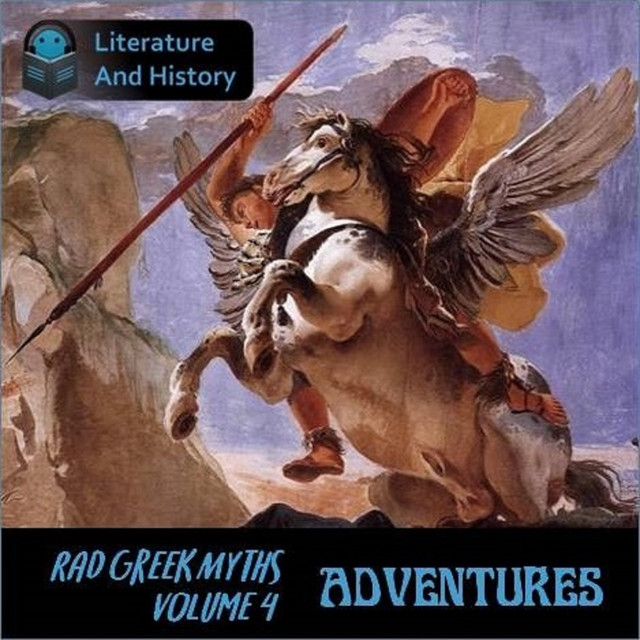
- RGM 4a: BellerophonRad Greek Myths, Volume 4a: Bellerophon | Volume 4 of Rad Greek Myths includes the stories of Bellerophon and Pegasus, and then Iphigenia. Bellerophon, a tragic figure, was a Corinthian prince who lost his father to a horrific accident, and his brother soon thereafter. An angry, irreligious man, Bellerophon’s only solace was his flying horse, the Pegasus, on whose back he explored the vast hill country of Anatolia and eventually, in the rugged country of Lycia, fought the Chimera. Bellerophon’s
- RGM 4b: IphigeniaRad Greek Myths, Volume 4b: Iphigenia | Volume 4 of Rad Greek Myths includes the stories of Bellerophon and Pegasus, and then Iphigenia. Bellerophon, a tragic figure, was a Corinthian prince who lost his father to a horrific accident, and his brother soon thereafter. An angry, irreligious man, Bellerophon’s only solace was his flying horse, the Pegasus, on whose back he explored the vast hill country of Anatolia and eventually, in the rugged country of Lycia, fought the Chimera. Bellerophon’s so
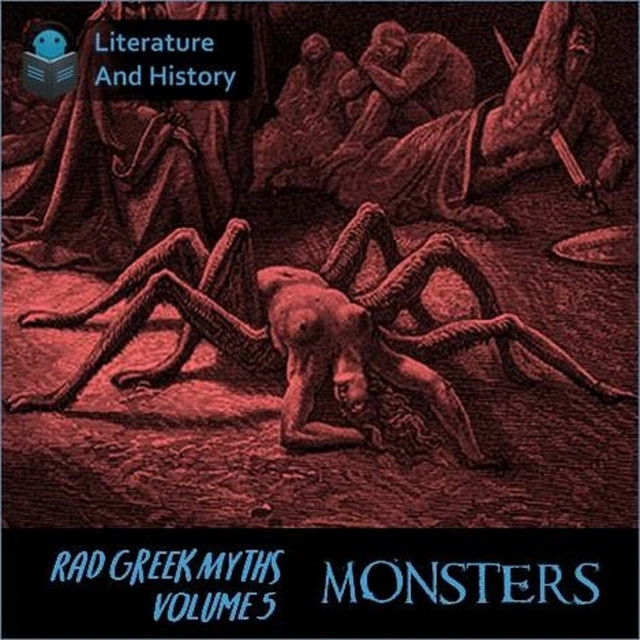
- RGM 5a: ArachneRad Greek Myths, Volume 5a: Arachne | Volume 5 of Rad Greek Myths is about two of the more sinister monsters in Ancient Greek mythology. The story of Arachne, until Ovid’s treatment of it, was a traditional tale of a hubristic mortal challenging a deity and being punished as a result. But as Ovid tells it – and as we will hear it in this program, Arachne’s story is about the monstrousness of the gods themselves – a group who would bear down on an innocent peasant girl and, out of jealousy and cr
- RGM 5b: TyphoiosRad Greek Myths, Volume 5b: Typhoios | Volume 5 of Rad Greek Myths is about two of the more sinister monsters in Ancient Greek mythology. The story of Arachne, until Ovid’s treatment of it, was a traditional tale of a hubristic mortal challenging a deity and being punished as a result. But as Ovid tells it – and as we will hear it in this program, Arachne’s story is about the monstrousness of the gods themselves – a group who would bear down on an innocent peasant girl and, out of jealousy and c